Namibia, Where the Sand Gets In
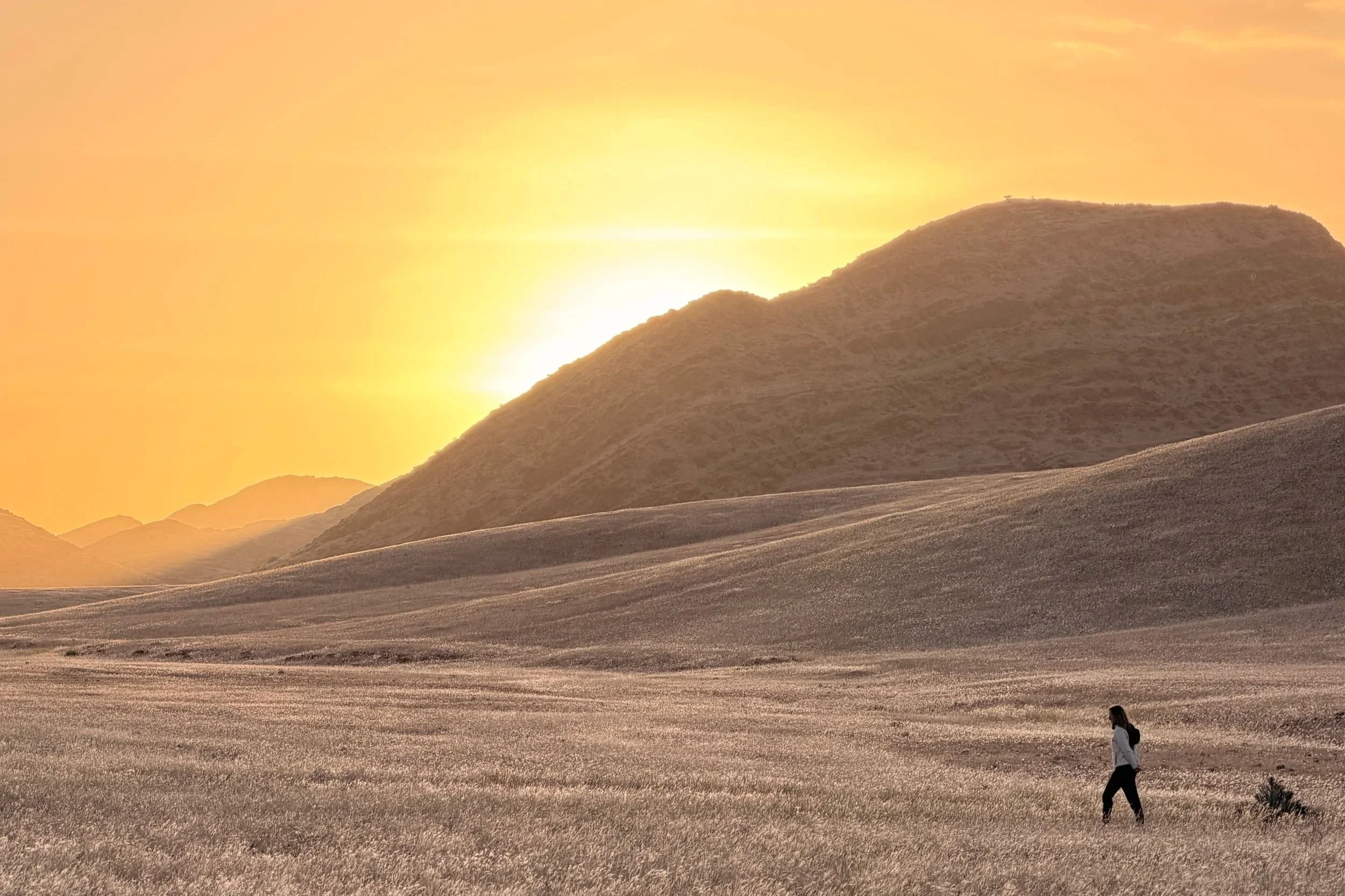
Walking safari in Namibia’s Hoanib Valley.
Namibia is not for the faint of heart. It asks for planning, patience, extra water, offline maps, a tolerance for rough roads, and a willingness to accept that sand will become part of your family.
Since our trip, I have been thinking less about the logistics lately and more about how these wide open spaces can be a type of cure.
Deserts may be the perfect antidote for a world that feels like it is closing in. Lately, it is hard to ignore the pressure of everything: wars and border politics, rising costs, fuel prices shaped by conflicts far away, and an increasingly divided world of people with options and people without them.
The desert offers something different. Not escape, but scale. And big wide open space to breathe.
Edward Abbey knew this. I have read Desert Solitaire multiple times, even as my affection for the book has become more complicated. Abbey can be cranky, dated, and casually misogynistic in ways that grate more with every rereading.
But when he writes about desert silence and wildness, he becomes almost reverent. It is, as he famously wrote, “a necessity of the human spirit.”
“There is something about the desert.… There is something there which the mountains, no matter how grand and beautiful, lack; which the sea, no matter how shining and vast and old, does not have.”
Most Things Are Better on Foot
Abbey was also adamant about getting out of the car.
You cannot really know a desert, he argued, through a windshield. You have to walk into it, notice the tracks, the beetles, and the small stubborn plants making a life out of almost nothing.
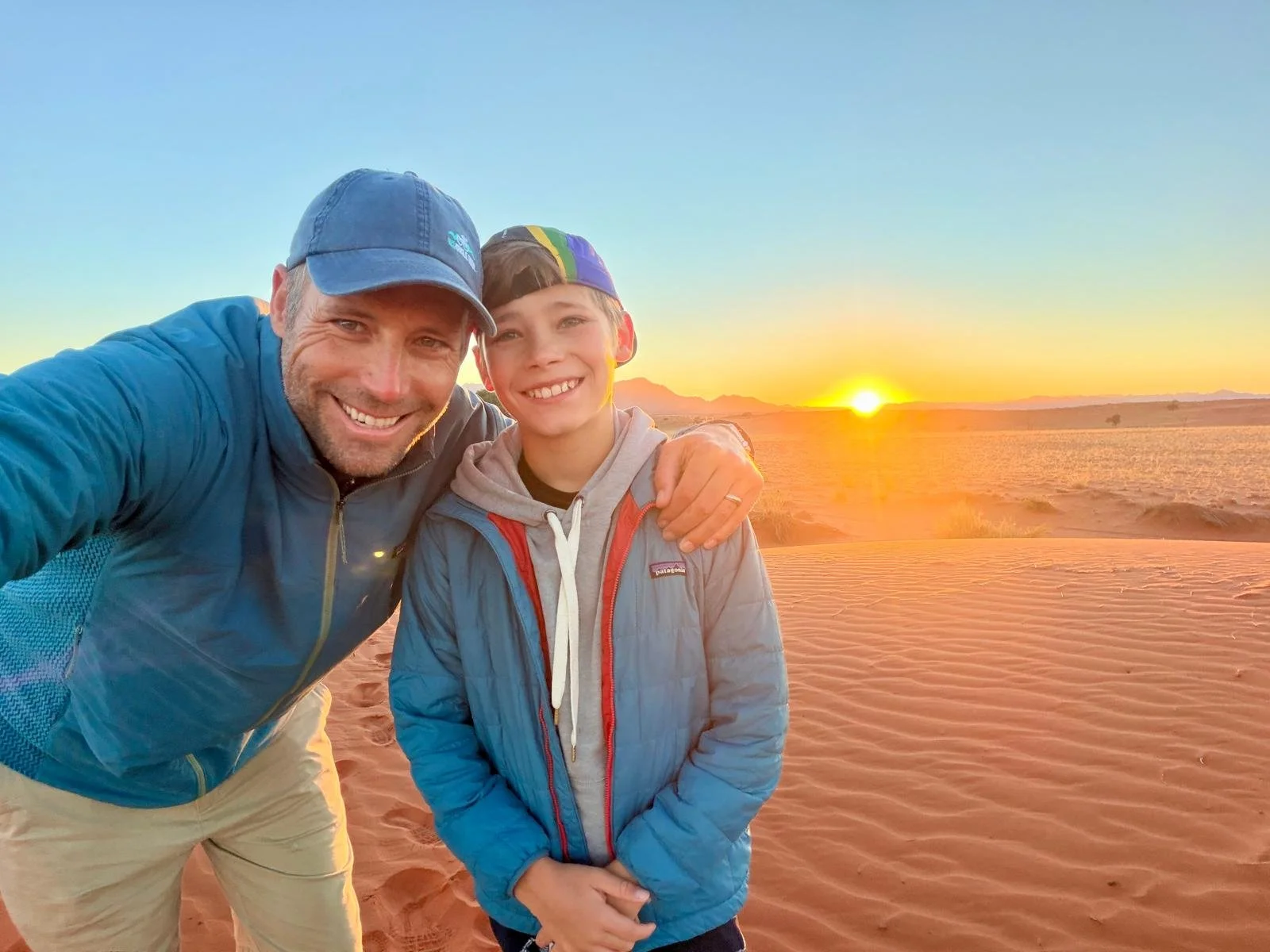
That felt true on the Tok Tokkie Trail, a three-day walking safari through the NamibRand Nature Reserve. After the long push west and a stop in Windhoek for supplies, we were happy to trade the car for our feet.
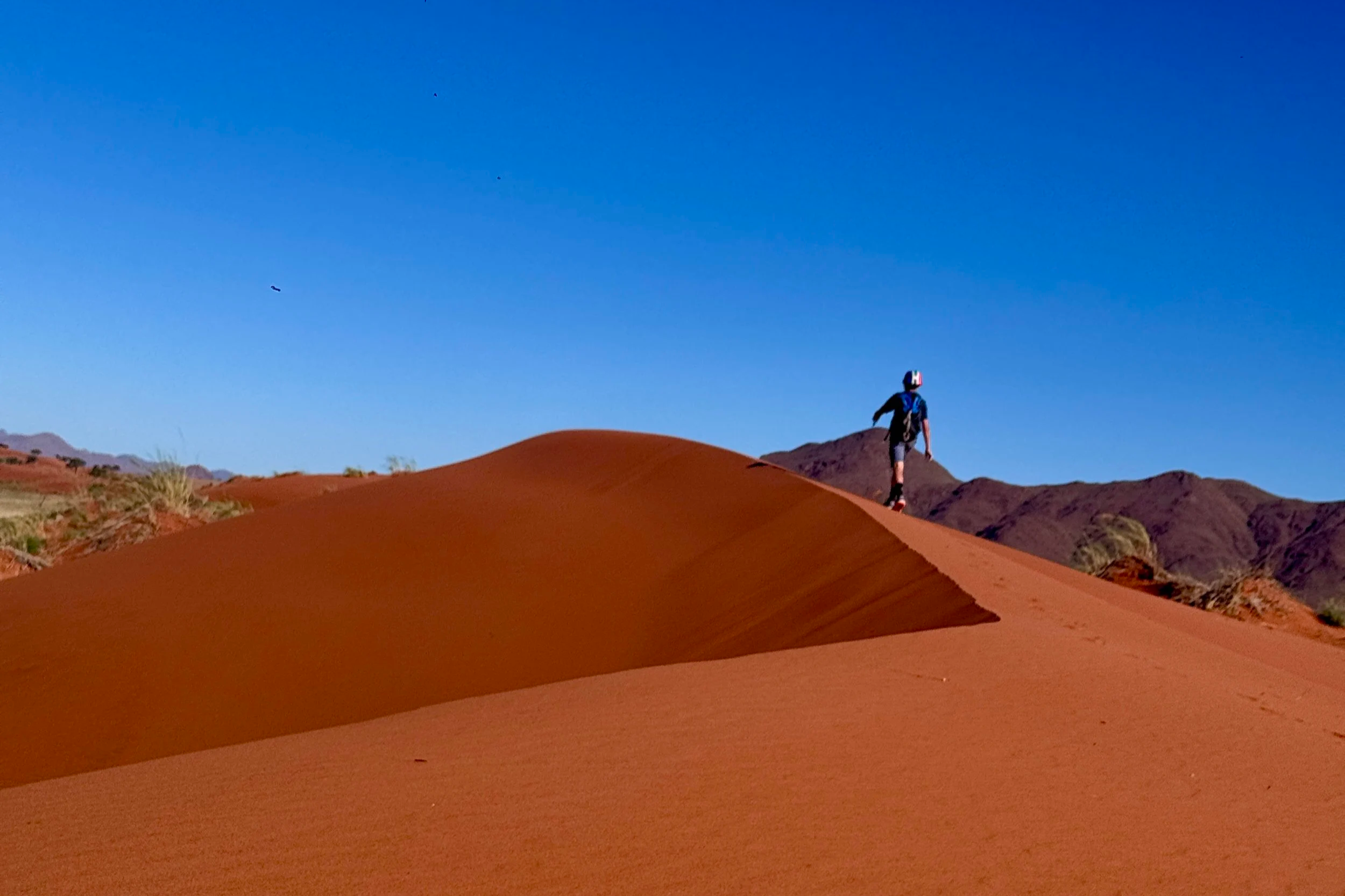
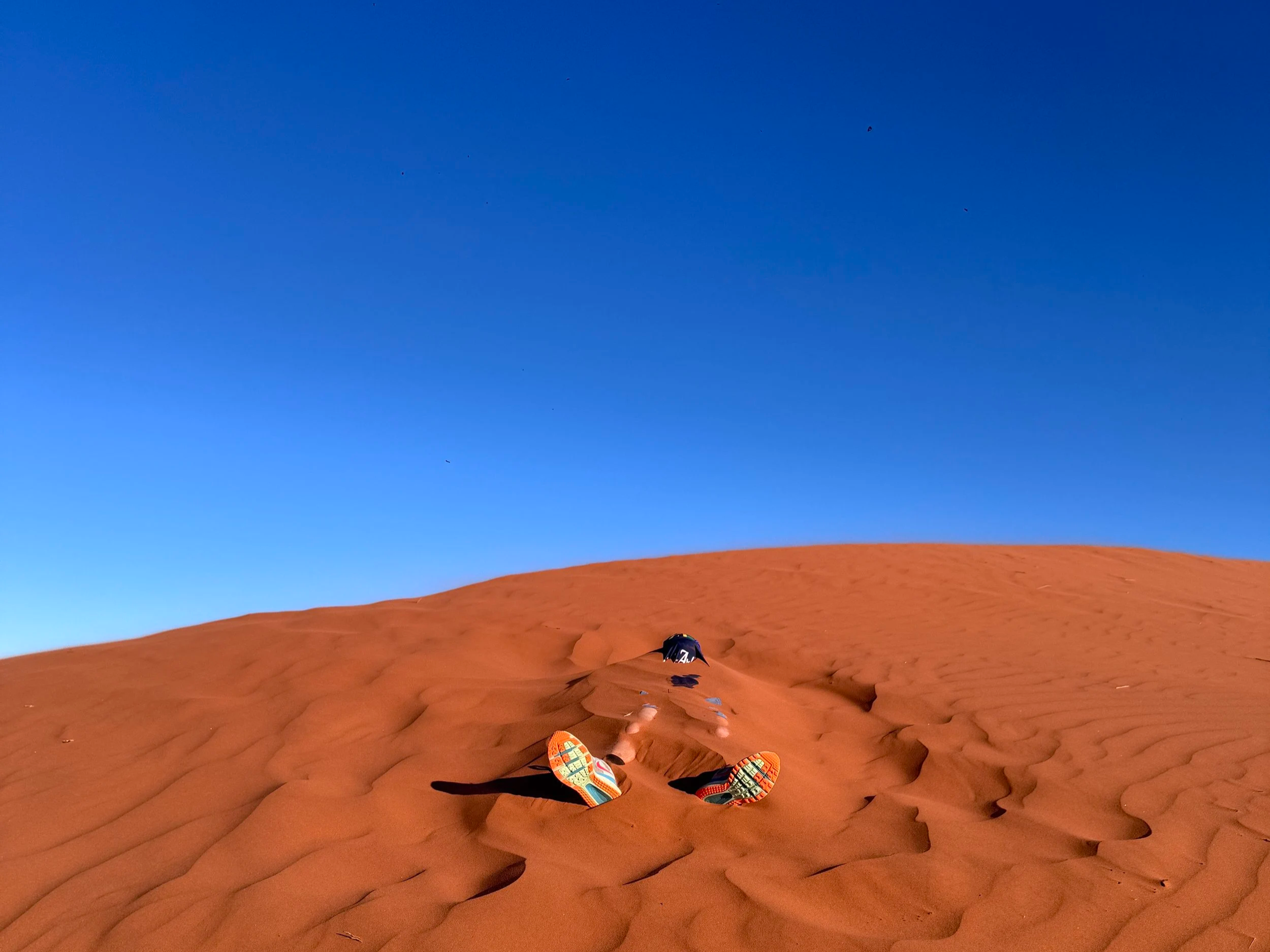
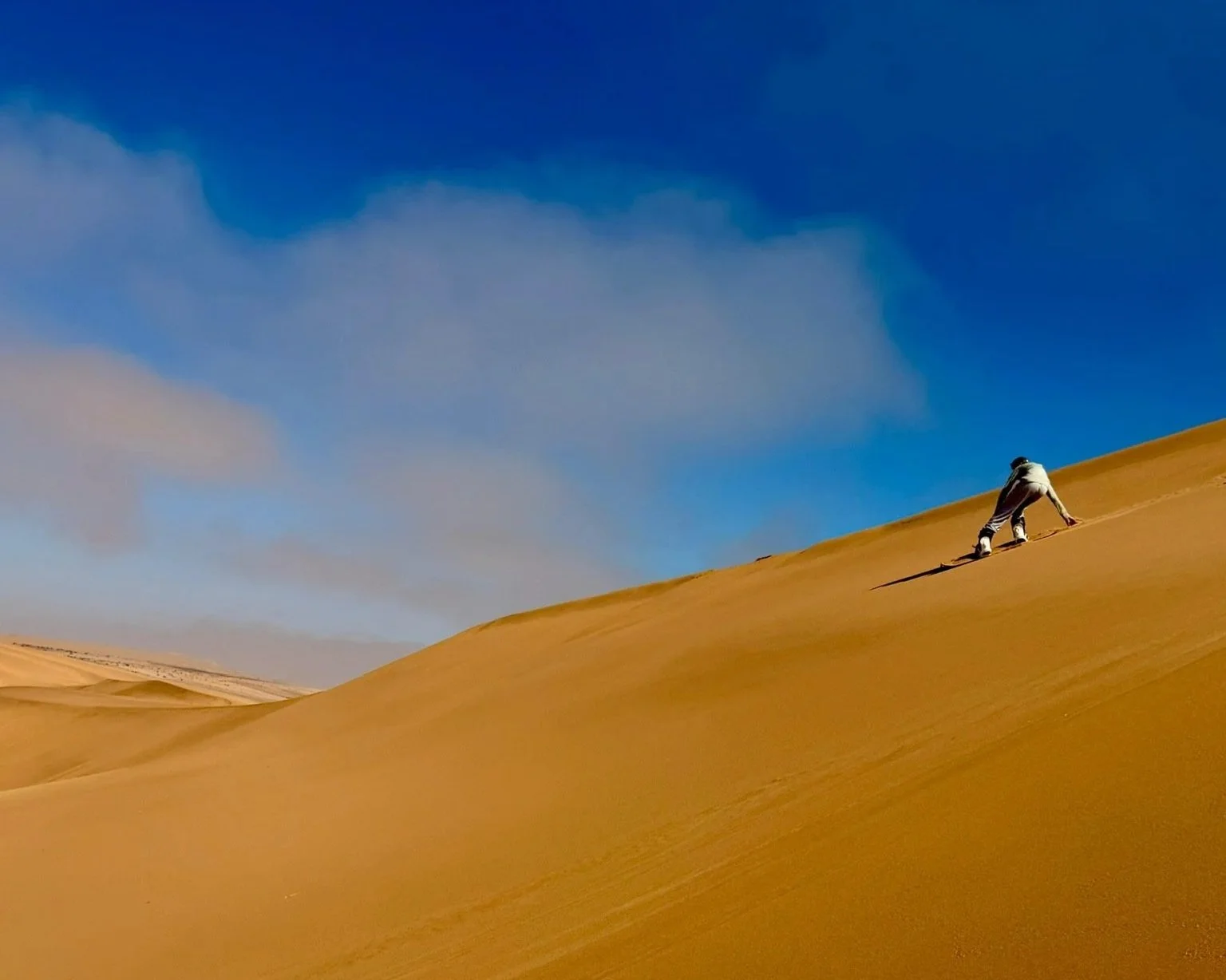
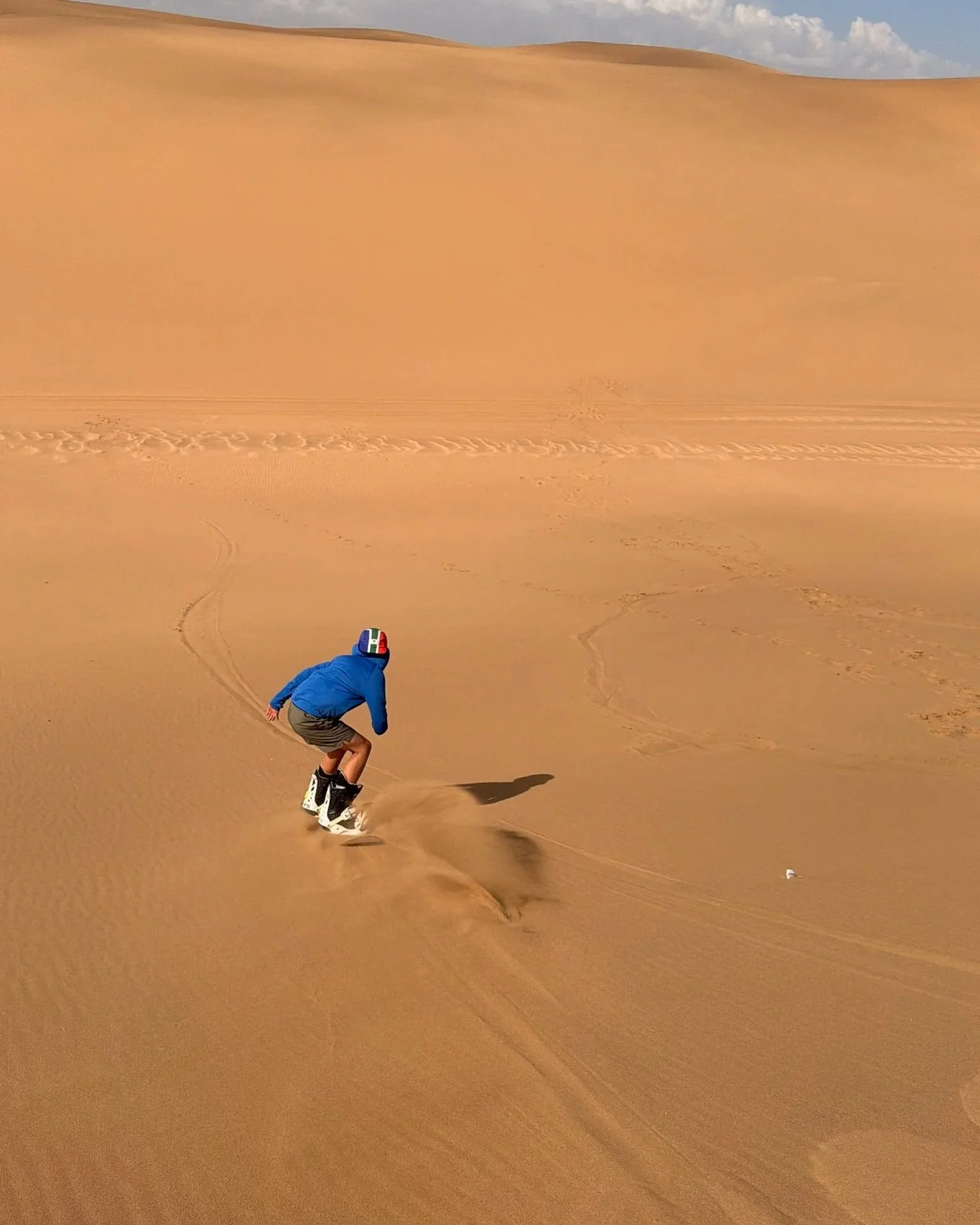
The boys naturally ran ahead, scrambled up dunes, slid down them, buried themselves in sand, and confirmed what every parent secretly hopes: that outdoor fun can still beat a screen.
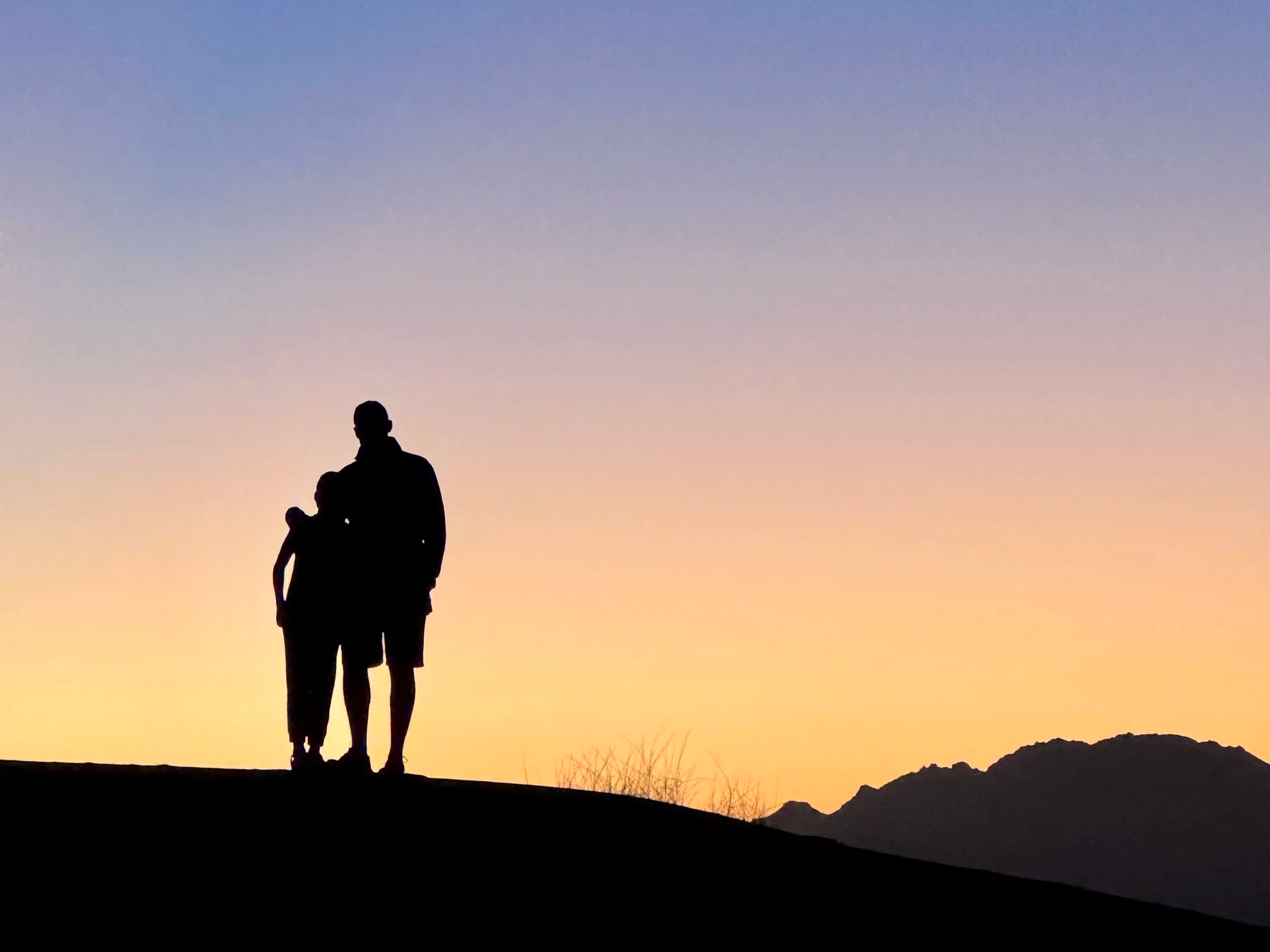
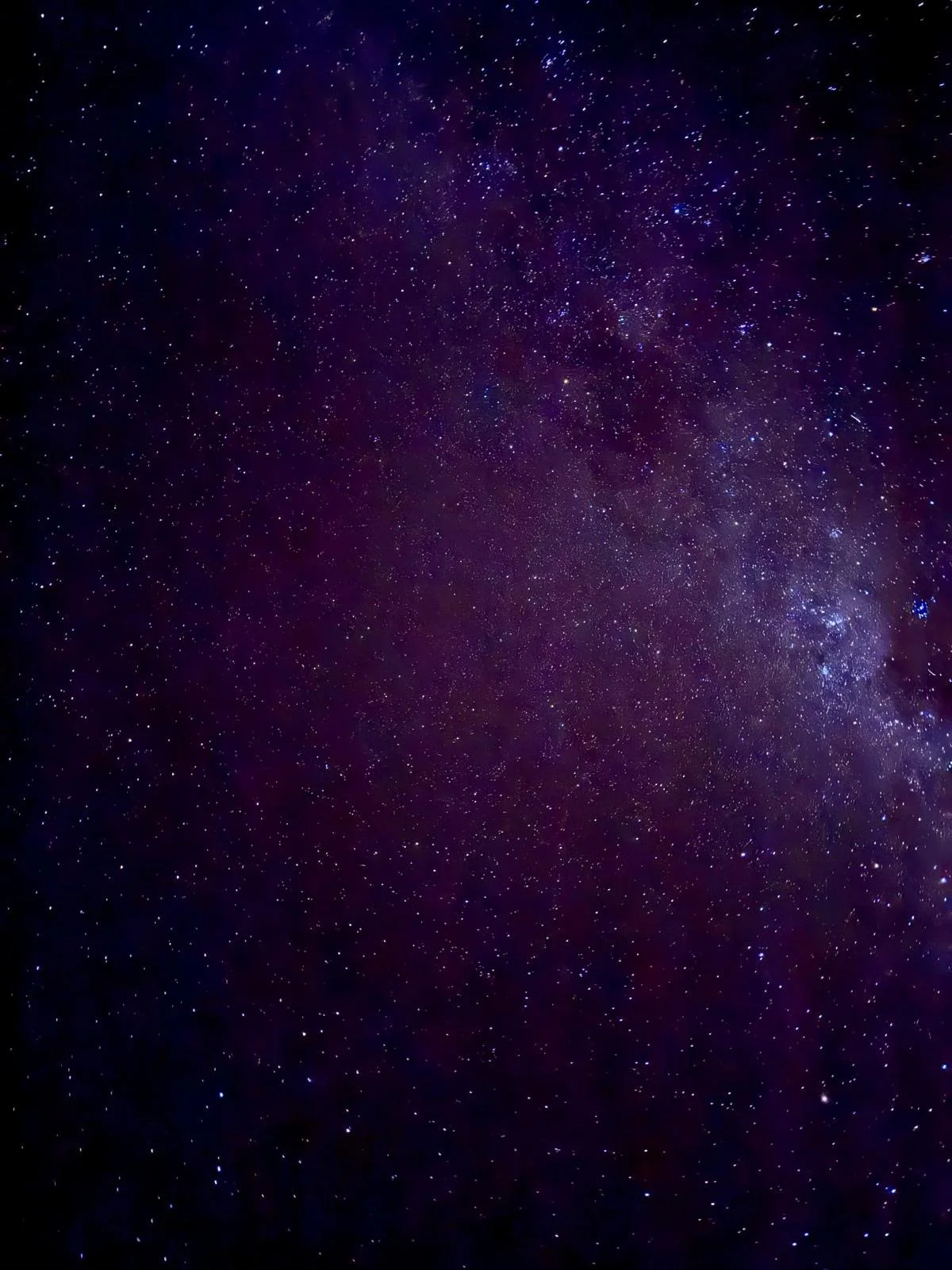
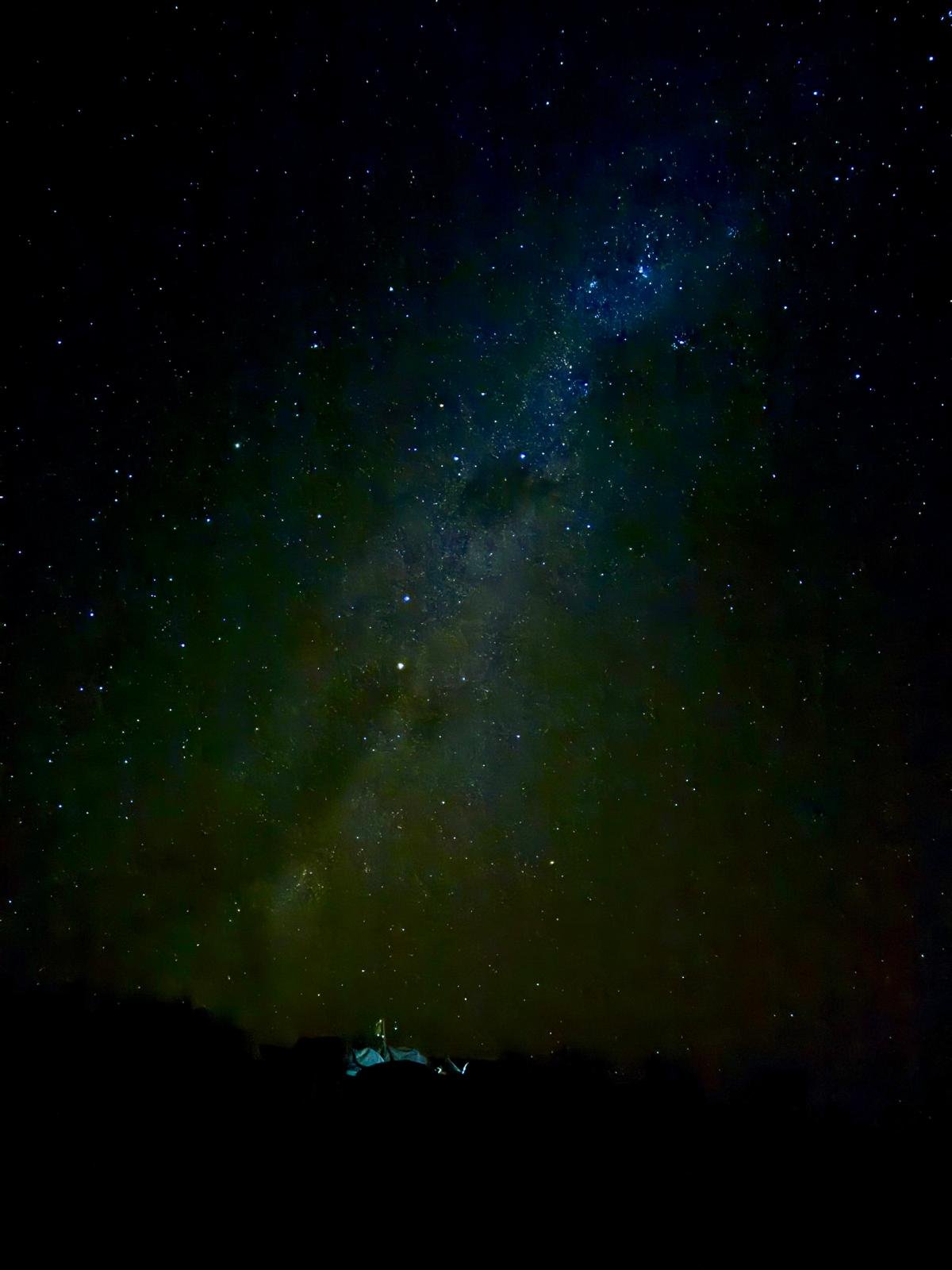
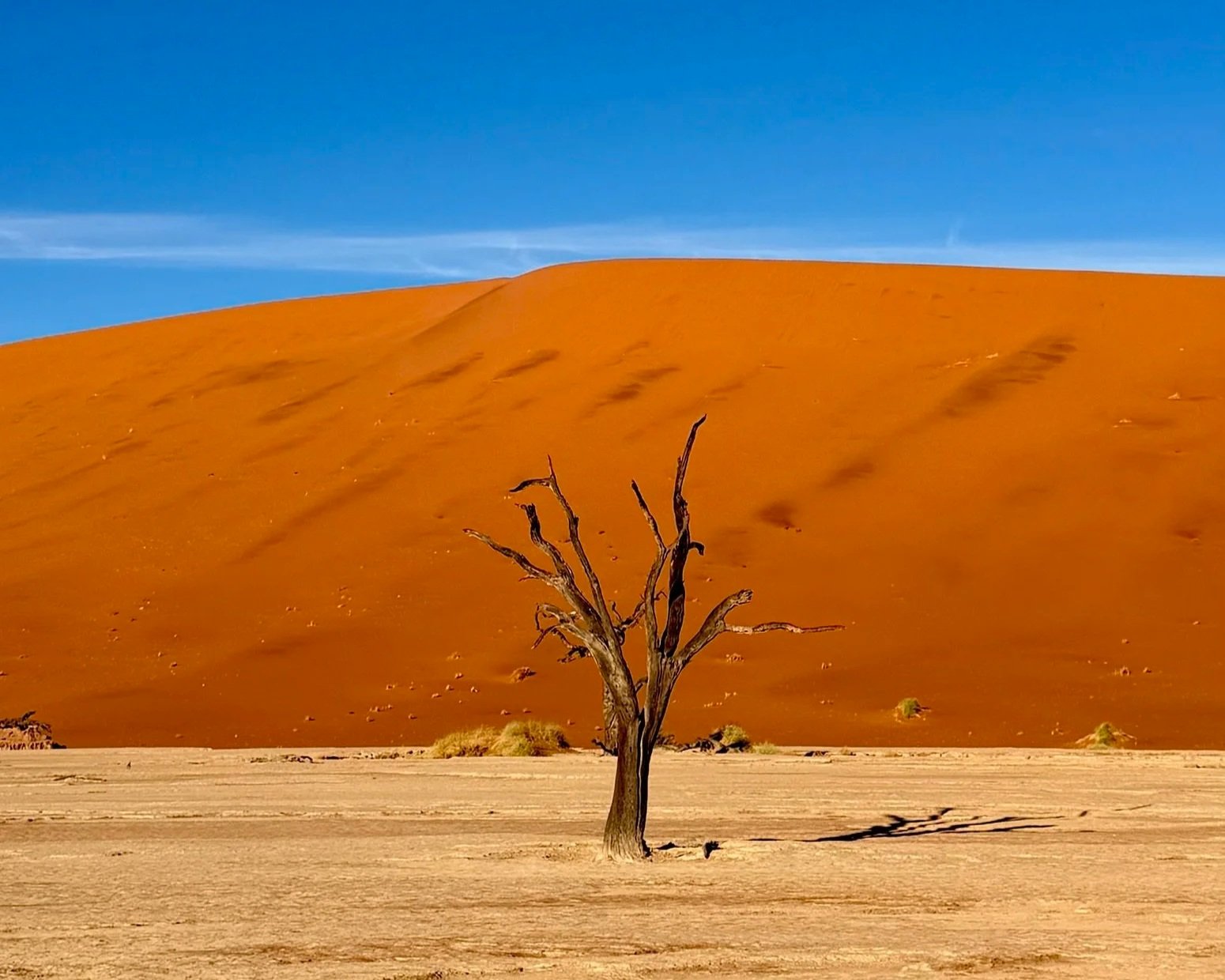
The days were all bright sand and impossible blue sky. But the nights were the thing. NamibRand is Africa’s first International Dark Sky Reserve, and we were there without a moon. The sky opened completely: stars layered over stars, shooting stars so frequent they became almost casual. It was the kind of sky that made the world feel ancient again, and us very small beneath it, which was exactly the point.
Beauty in the Breakdown
A few days in, Namibia took Abbey’s advice a little too literally. We were out of the car, all right.
We were on the washboard road from Tok Tokkie to Sesriem when the dashboard lit up, coolant appeared where coolant should not be, and our car made it clear it was done cooperating. We pulled over about 80 kilometers from the next stop with no cell signal, no quick fix, and no convenient roadside anything.
For a few minutes, it felt like we were very much on our own.
And then a traveler stopped. Then another. Then another. A ride was offered. Tools appeared. Space was made in an already packed car. Plans were cobbled together out of almost nothing.
Abbey may be useful on silence, solitude, and the moral necessity of wild places, but this was a moment for someone with a little more faith in people. Mr. Rogers had it right: “Look for the helpers. You will always find people who are helping.”
Eventually, Kris found two bush mechanics in Sesriem, who raided a junkyard and tried to bring the car back to life with whatever they had. The fix did not quite hold, the tow wire later snapped in the dark, and the whole thing became more ridiculous than heroic.
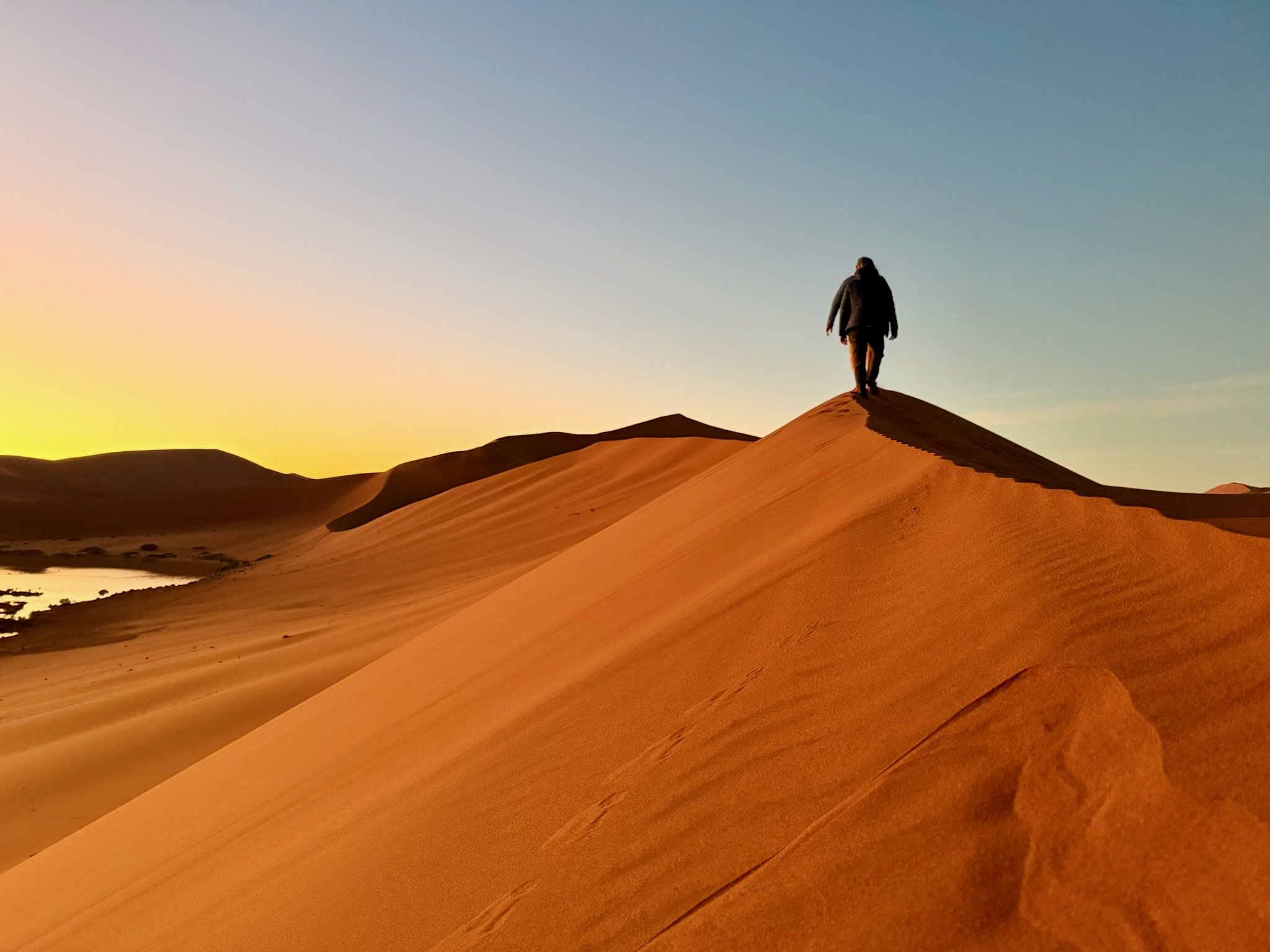
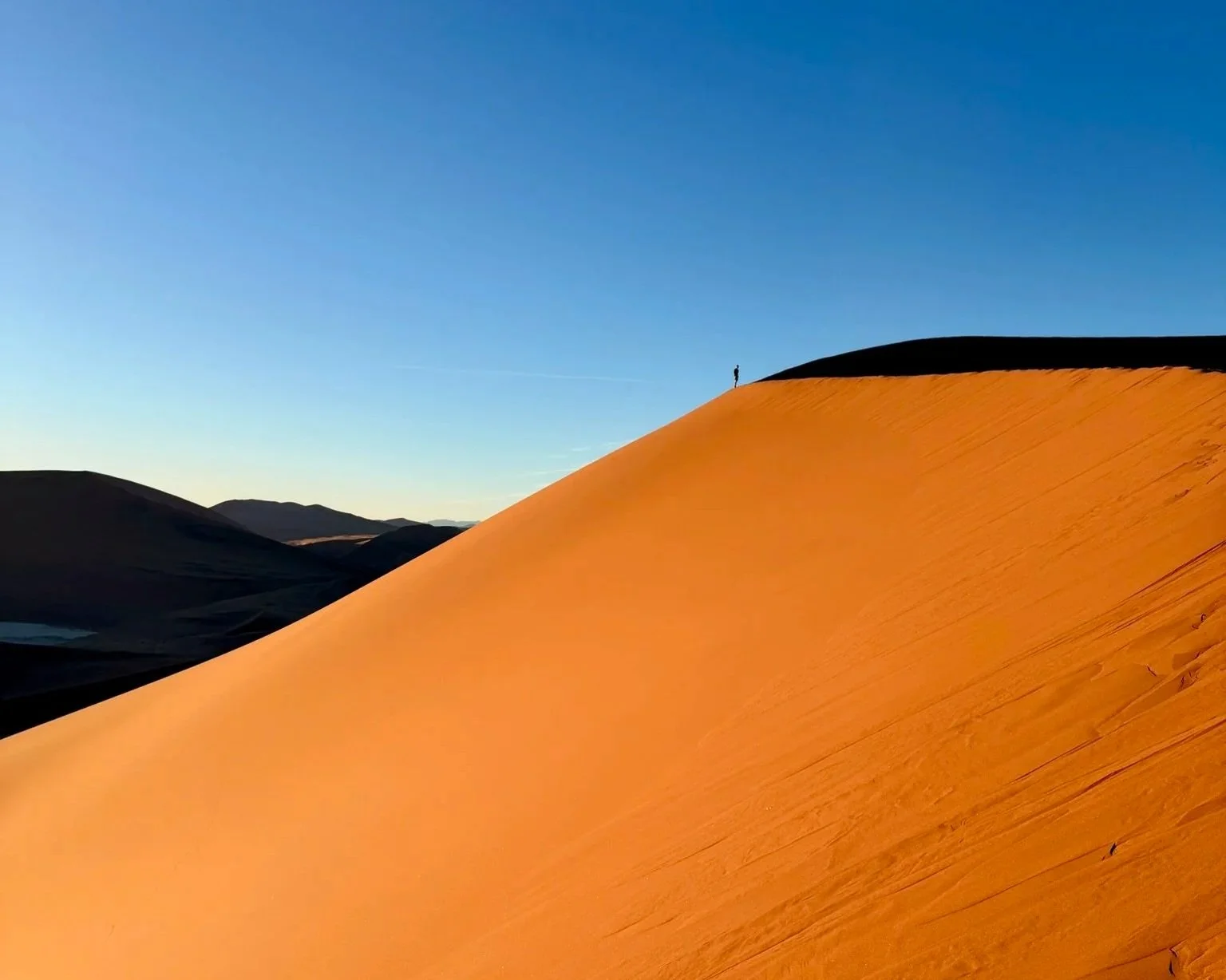
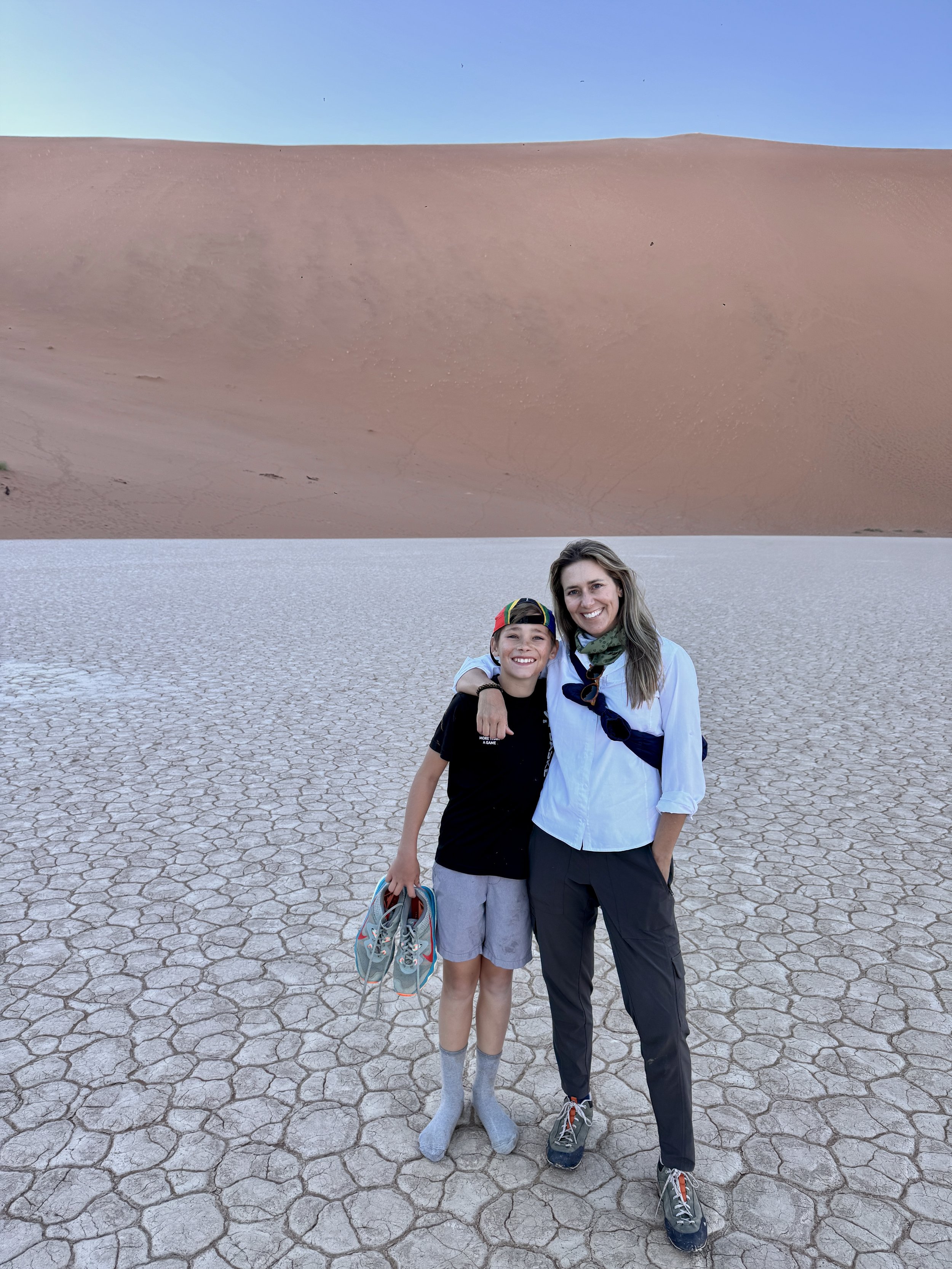
But we made it. Too late and too tired to pitch a tent, grateful for a bed, and somehow exactly where we needed to be. By dawn, the breakdown had turned into a gift: an early ride into Sossusvlei and first tracks up Big Daddy, one of the tallest dunes.
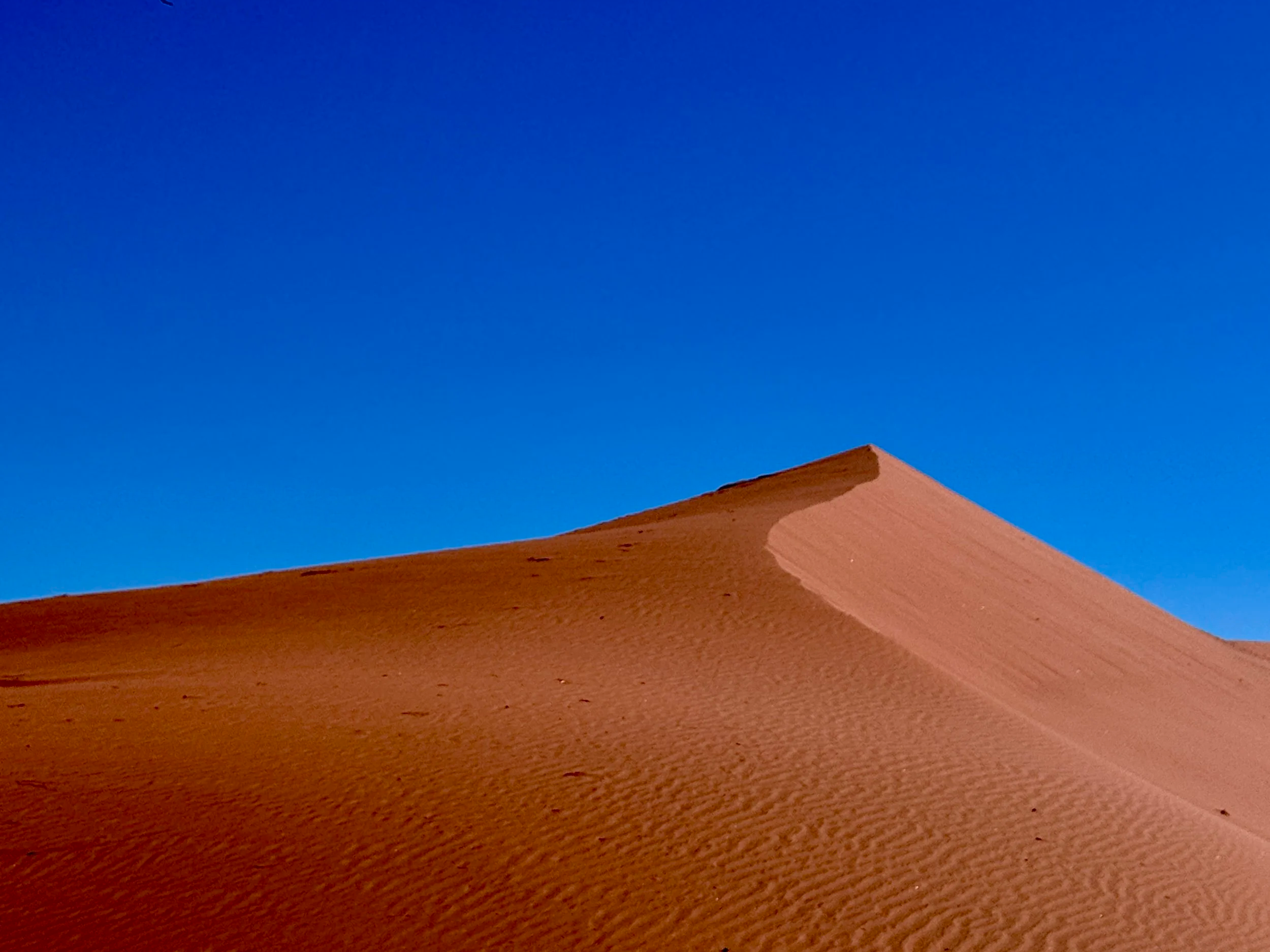
Hiking these things looks simple from below, which is one of the dune’s many lies. Every step slid backward. Our shoes filled with sand until it felt like we were carrying extra feet. It took nearly two hours to get up and about ten minutes to get down.
We ran down half falling, half flying, laughing so hard we could barely stay upright. The valley was still mostly empty, and our voices carried across all that open space. When we found our guide again, he smiled and said, “We heard you.”
The night before, we had been stranded beside the road. By morning, we were alone on top of one of Namibia’s most famous dunes, filling the silence with ridiculous, relieved, joyful noise. The detour had worked out better than the plan.
Where the Desert Meets the Sea
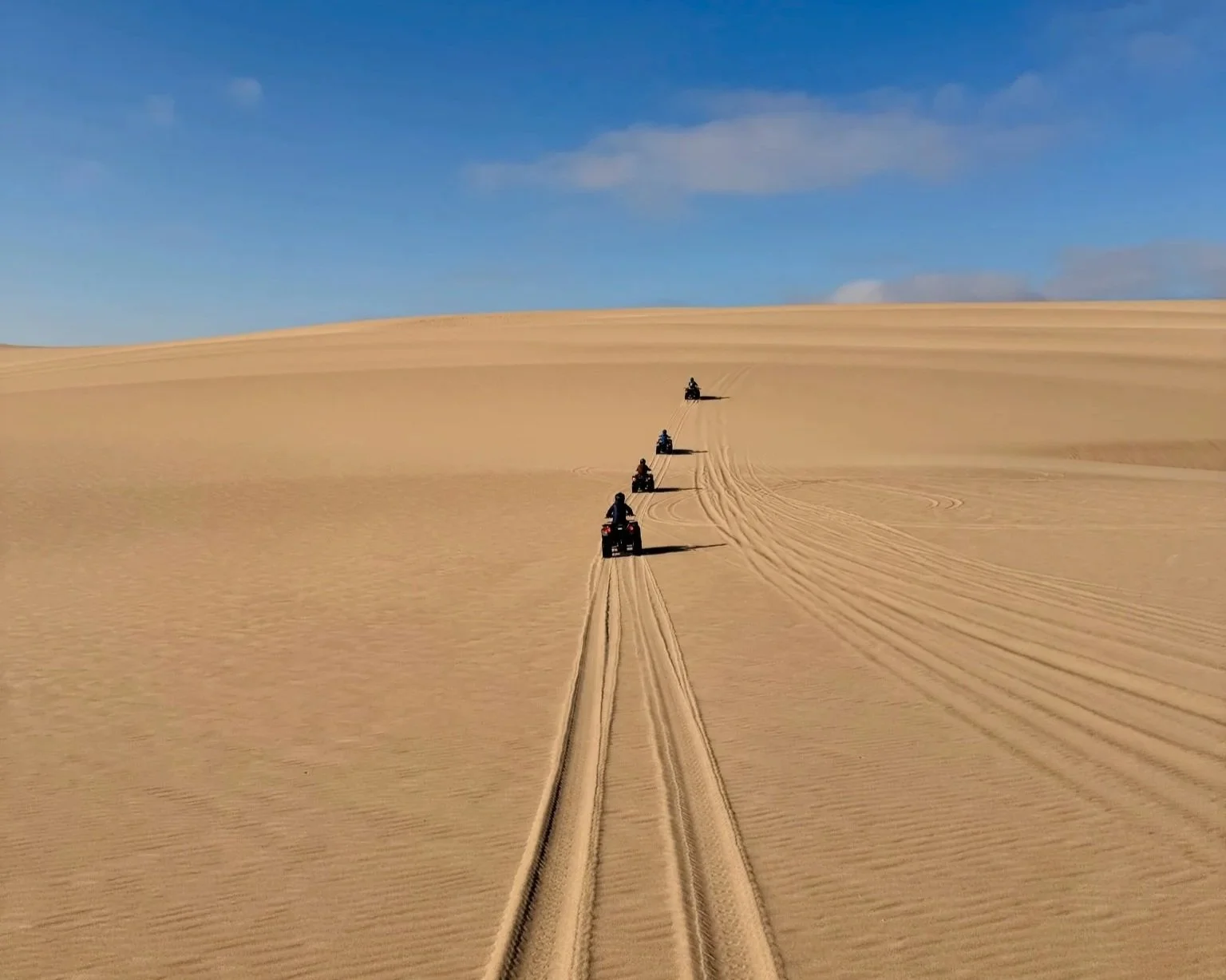
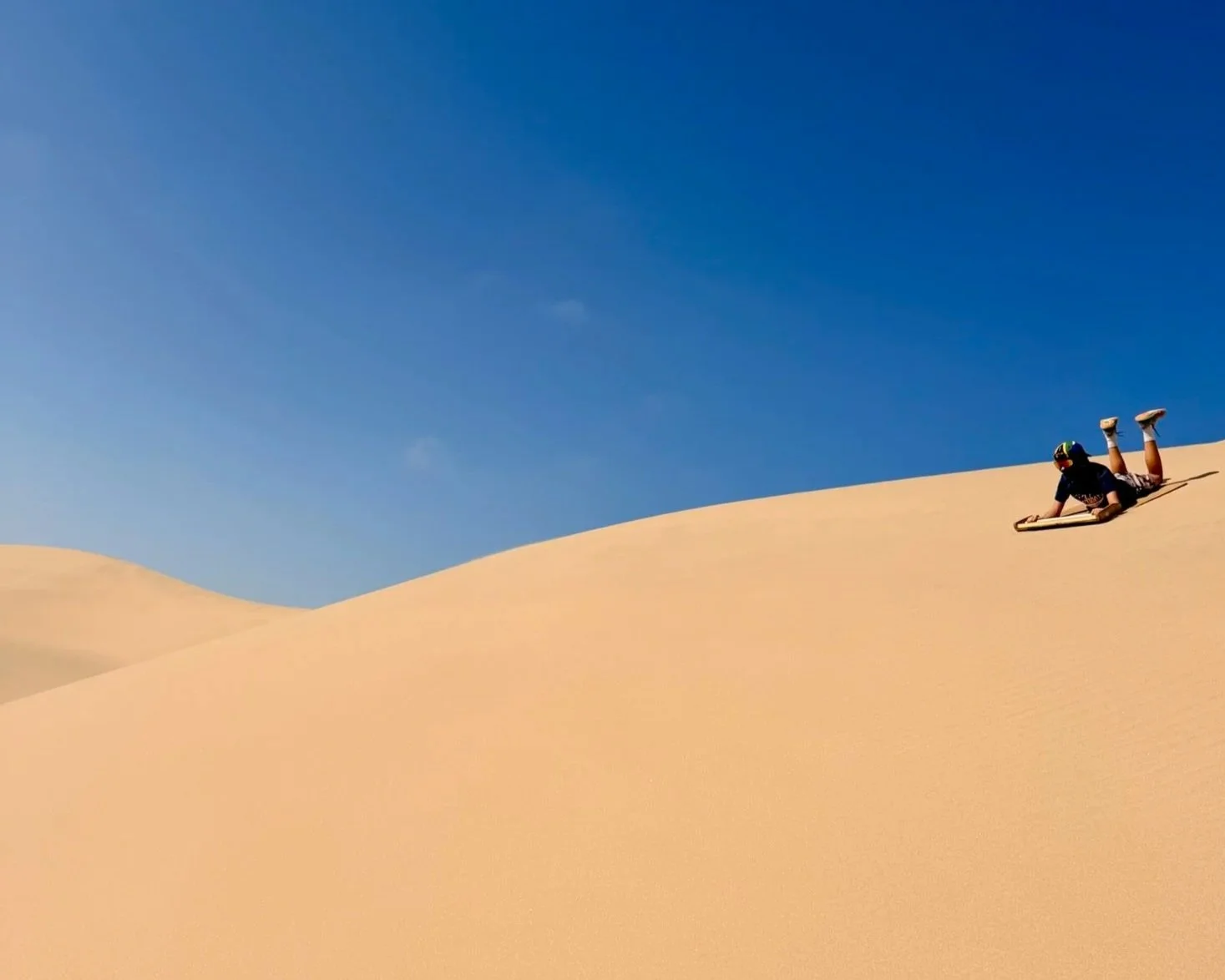
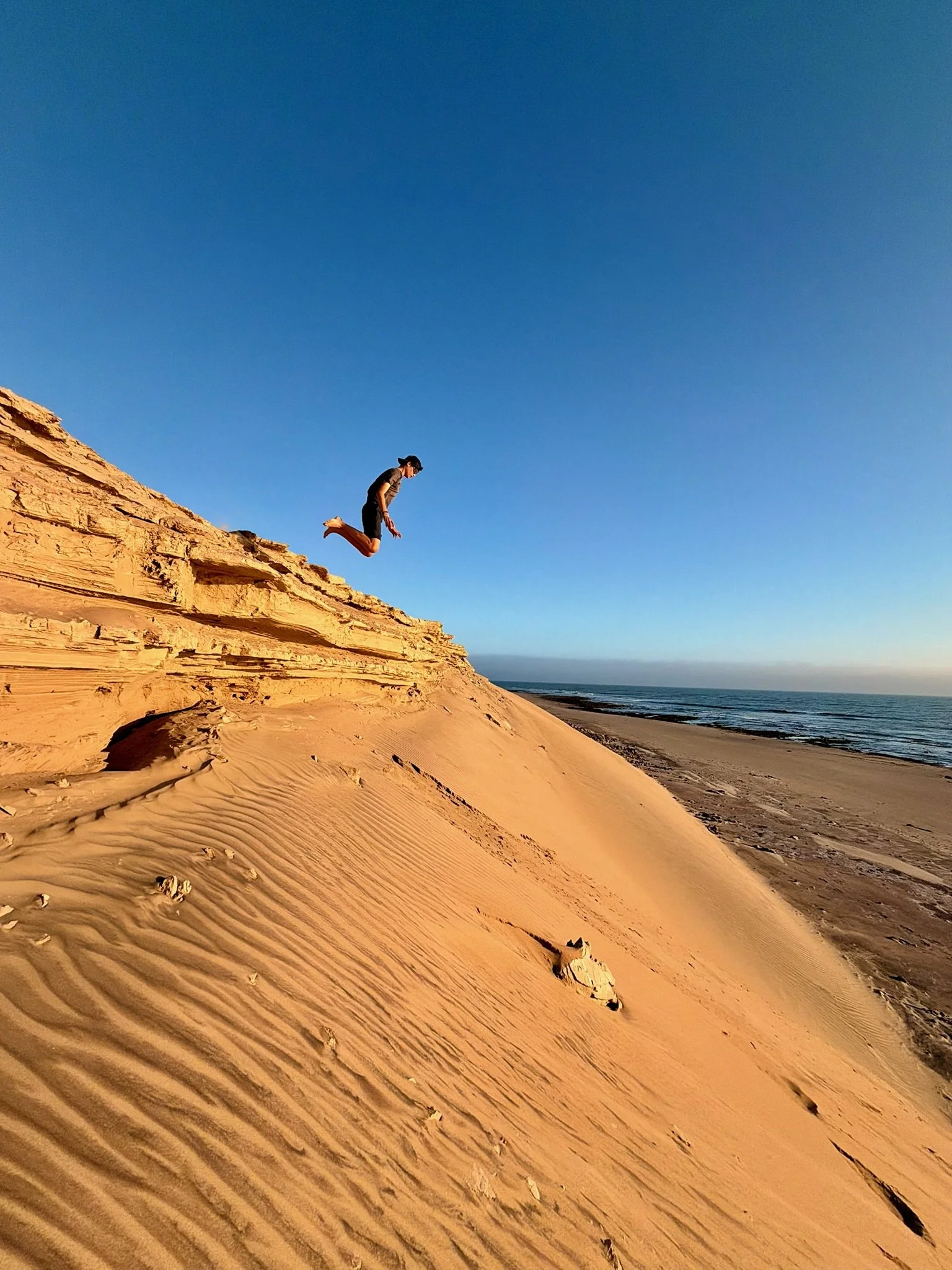
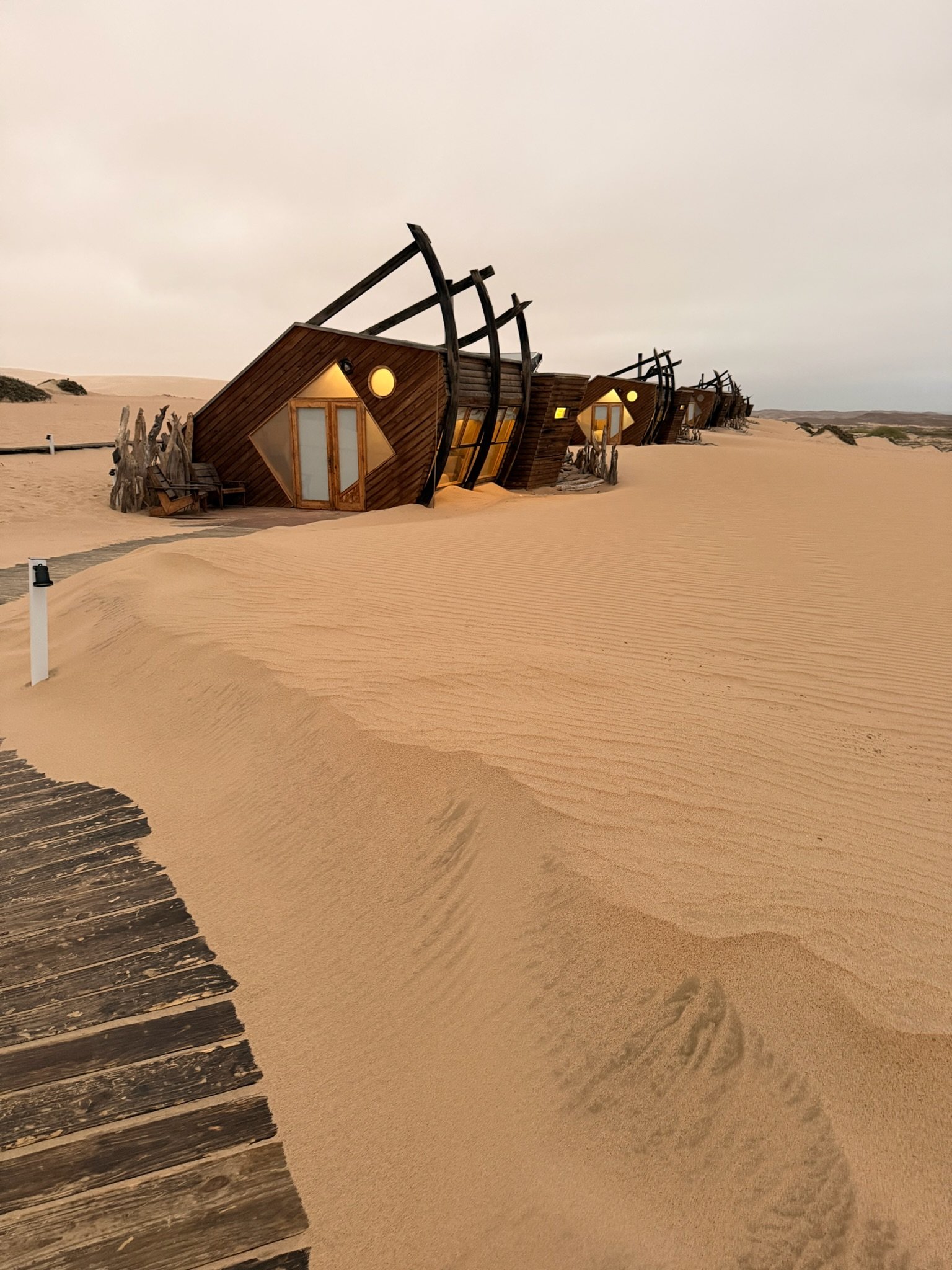
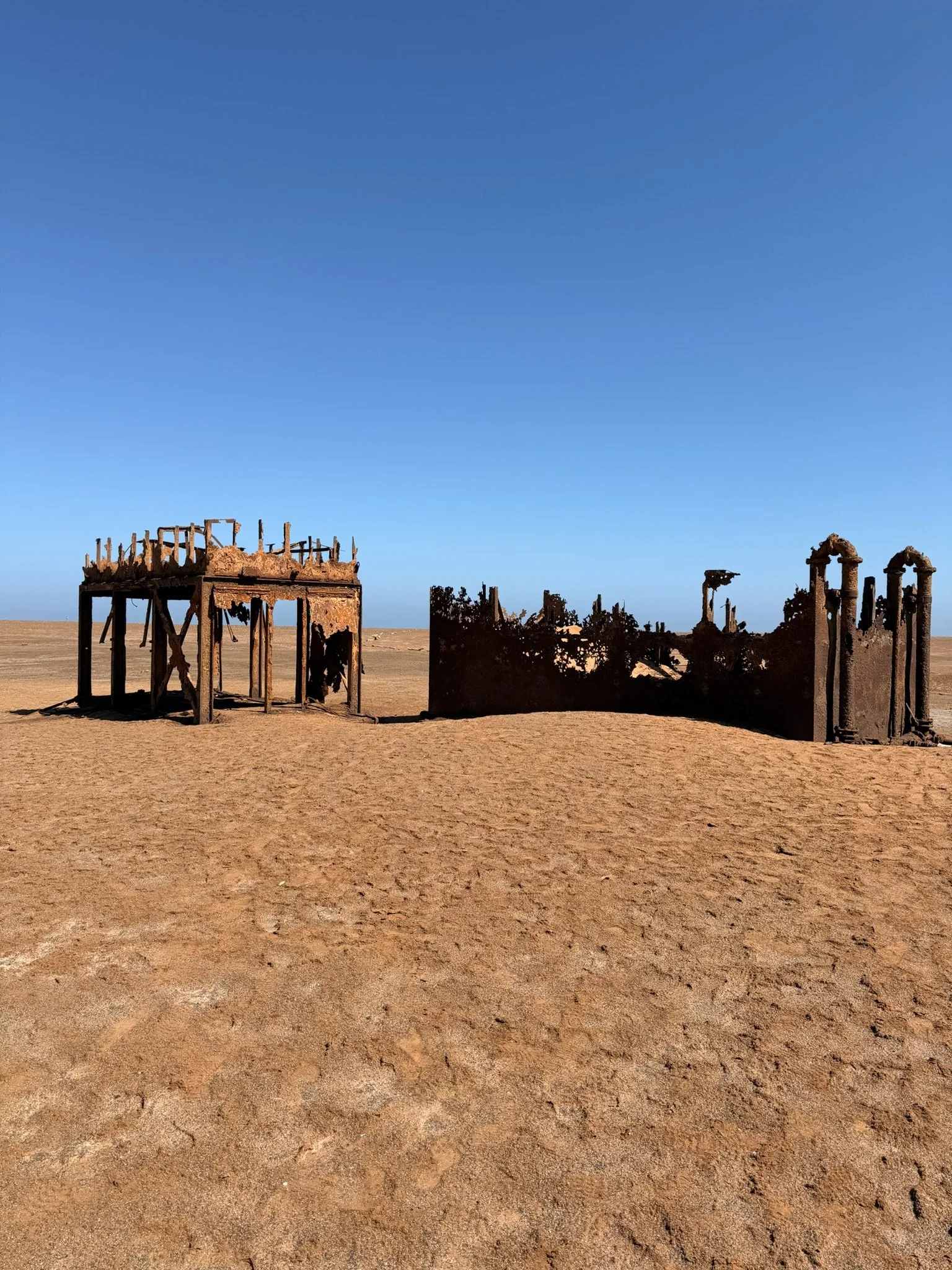
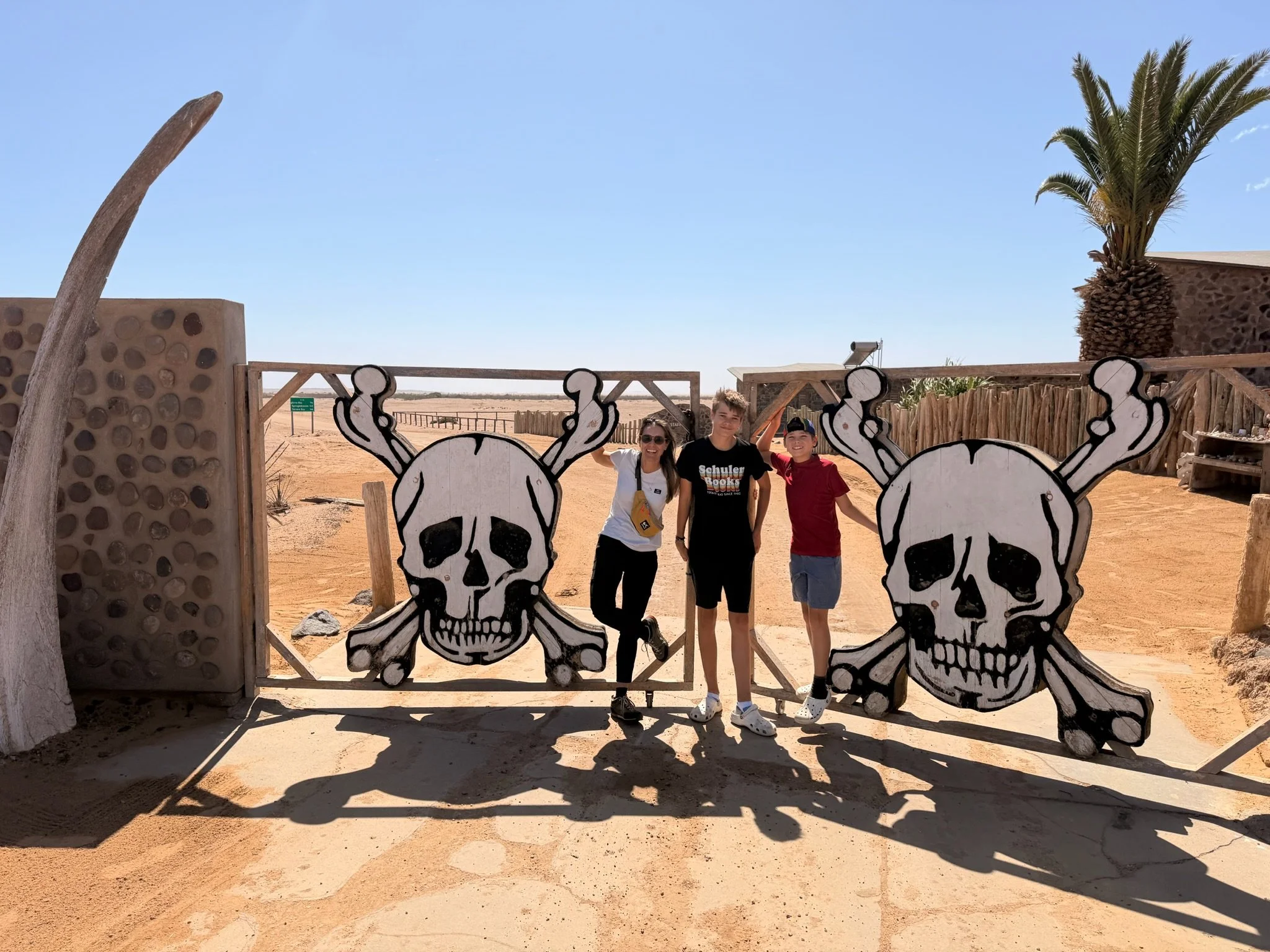
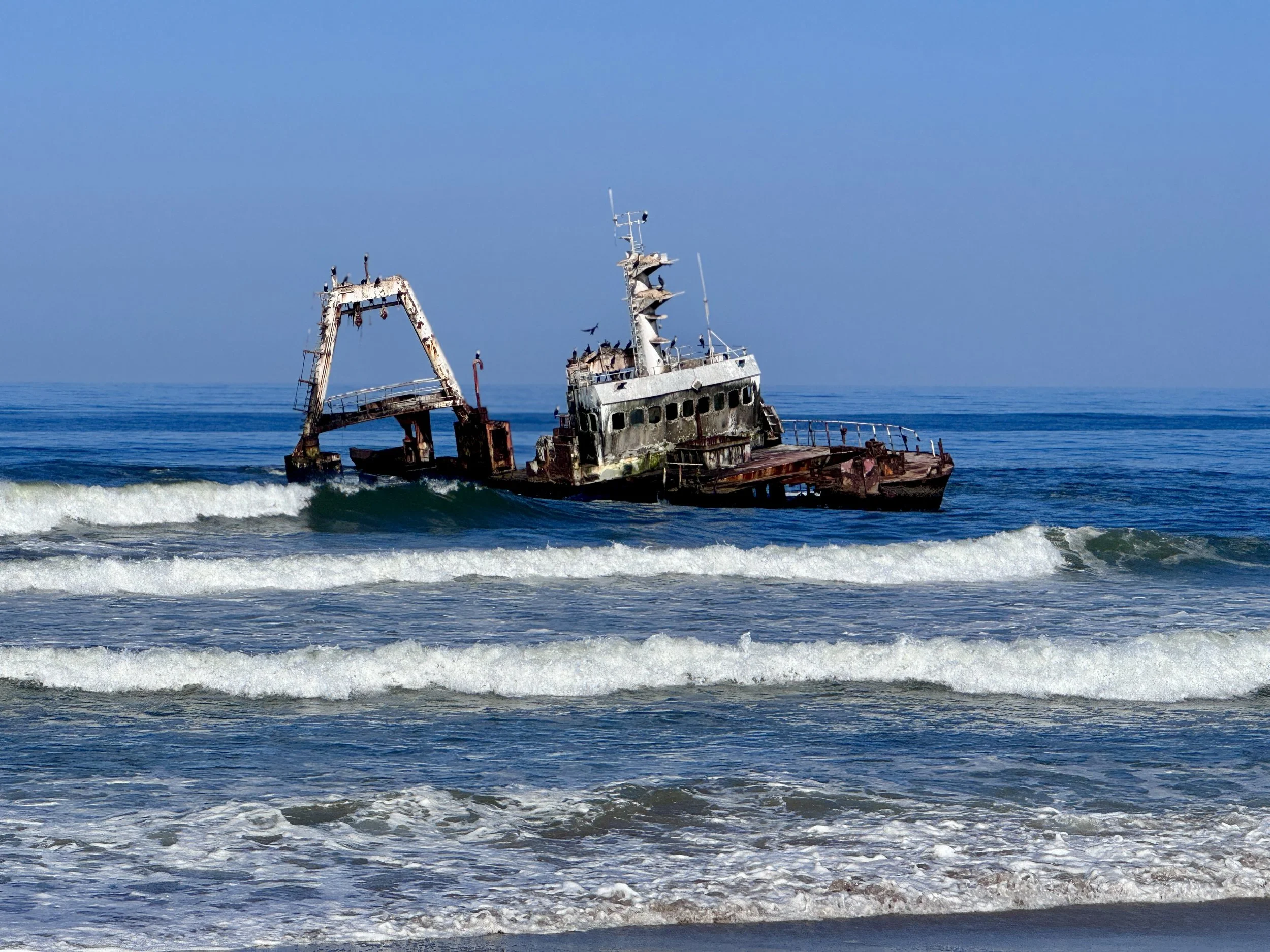
The place where the Namib Desert meets the Atlantic feels like the meeting of two infinities. Sand runs toward water. Fog drifts over dunes. The ocean roars beside a landscape built on silence.
Swakopmund was our brief reentry point after days of desert driving, but the farther north we went, the stranger the coast became. The road thinned, the fog moved in, and then, quite literally, the road ended. It reminded me of Abbey’s line about “the red dust and the burnt cliffs and the lonely sky — all that which lies beyond the end of the roads.”
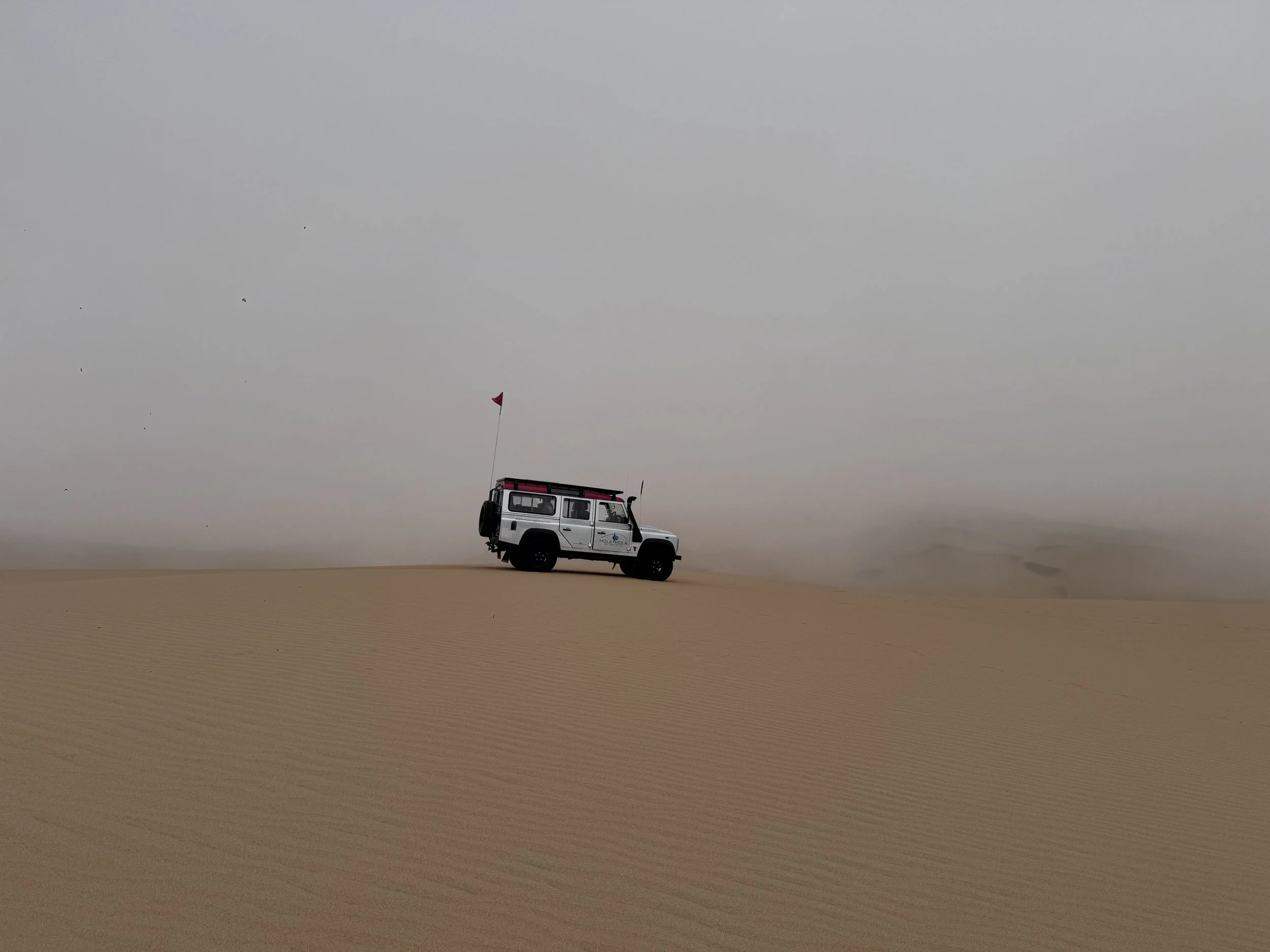
To reach Shipwreck Lodge, we left the track and followed our guide straight into the sand, driving across a landscape that seemed to belong to no one and nothing. Bones were everywhere: seal bones, whale bones, bird bones, fish bones, ship bones. The coast has been called the “Coast of Loneliness” and the “Coast of Diamonds and Death,” which feels dramatic until you are standing there with fog rolling in, the Atlantic pounding beside you, and a sign warning you not to leave your car because lions roam the beach.
Shipwreck’s cabins look like cozy ships stranded in the sand, tucked between dunes and sea. It was the highlight of our trip. We quad biked through dunes, ate beautifully, watched the light change over the sand, and kept asking the same question: what must it take to make a place like this work way out here?
Hoanib Valley and the Long Road Back
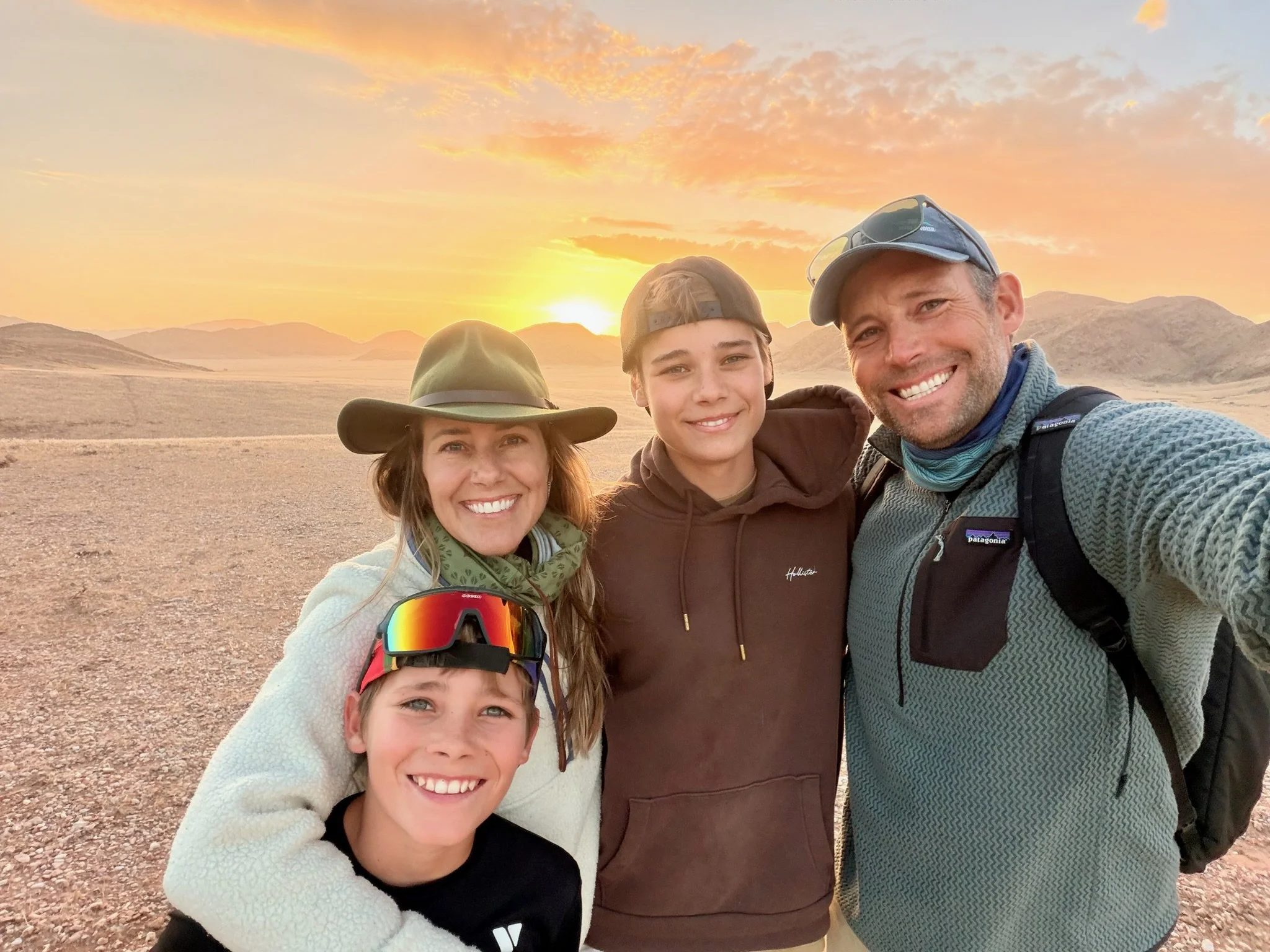
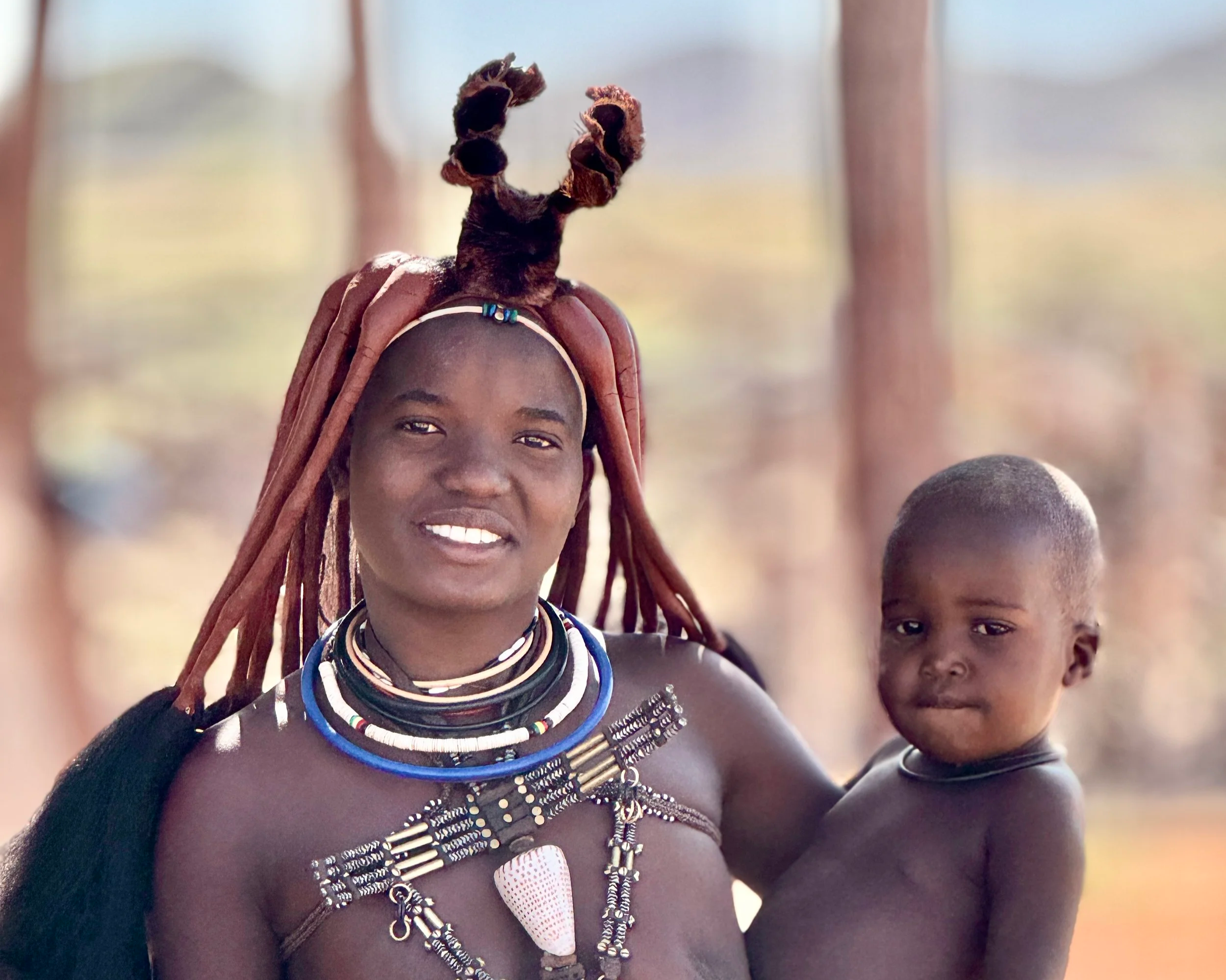
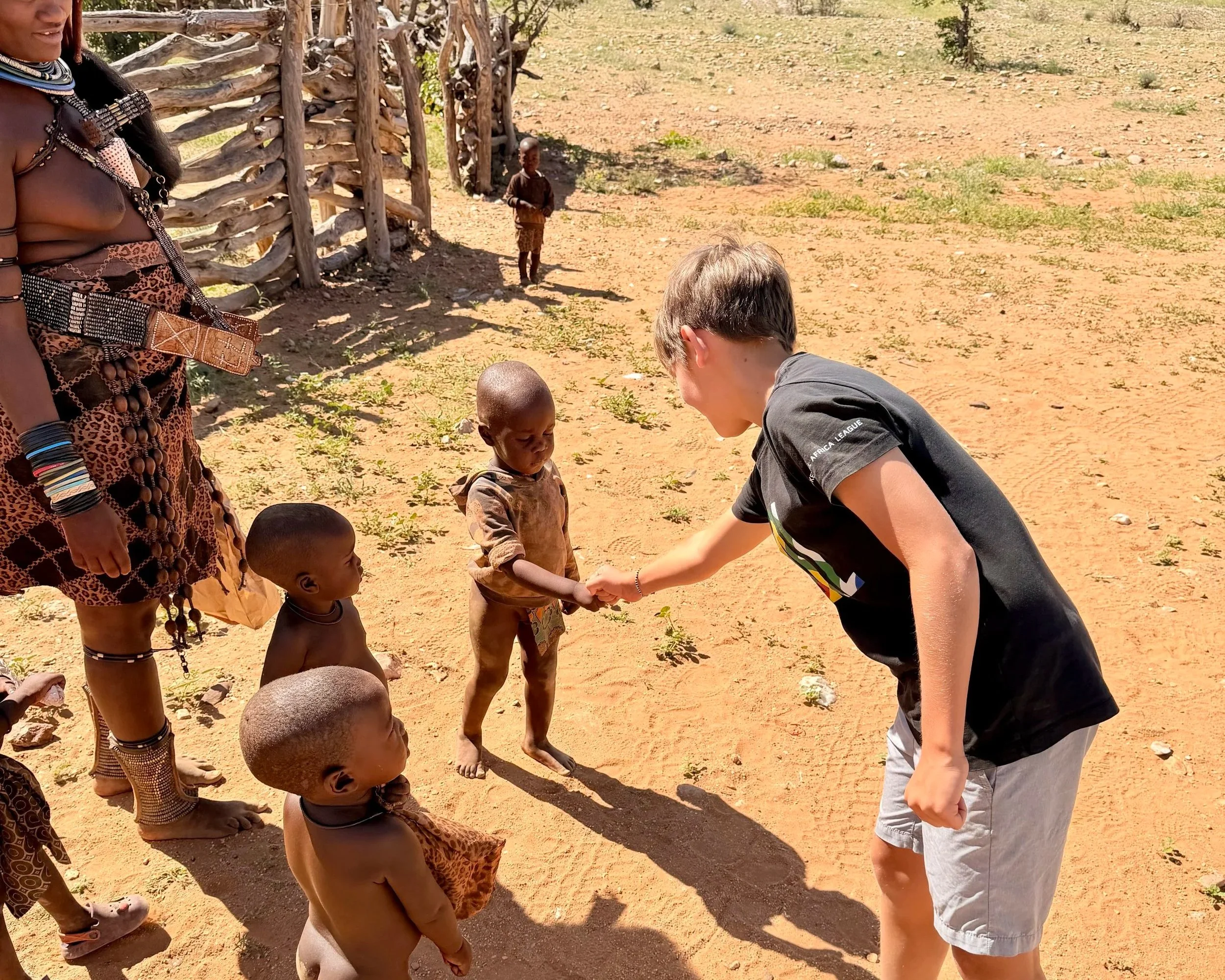
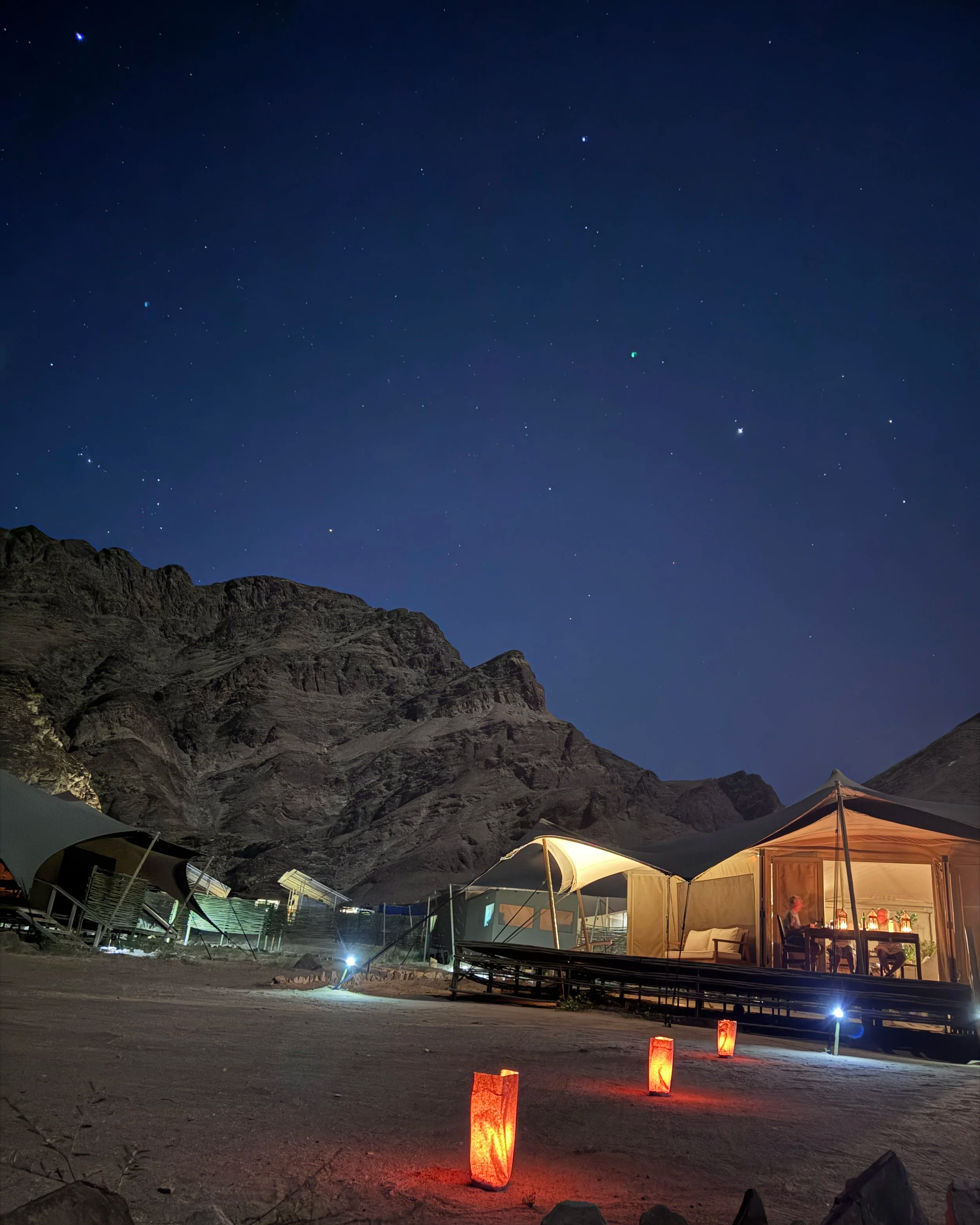
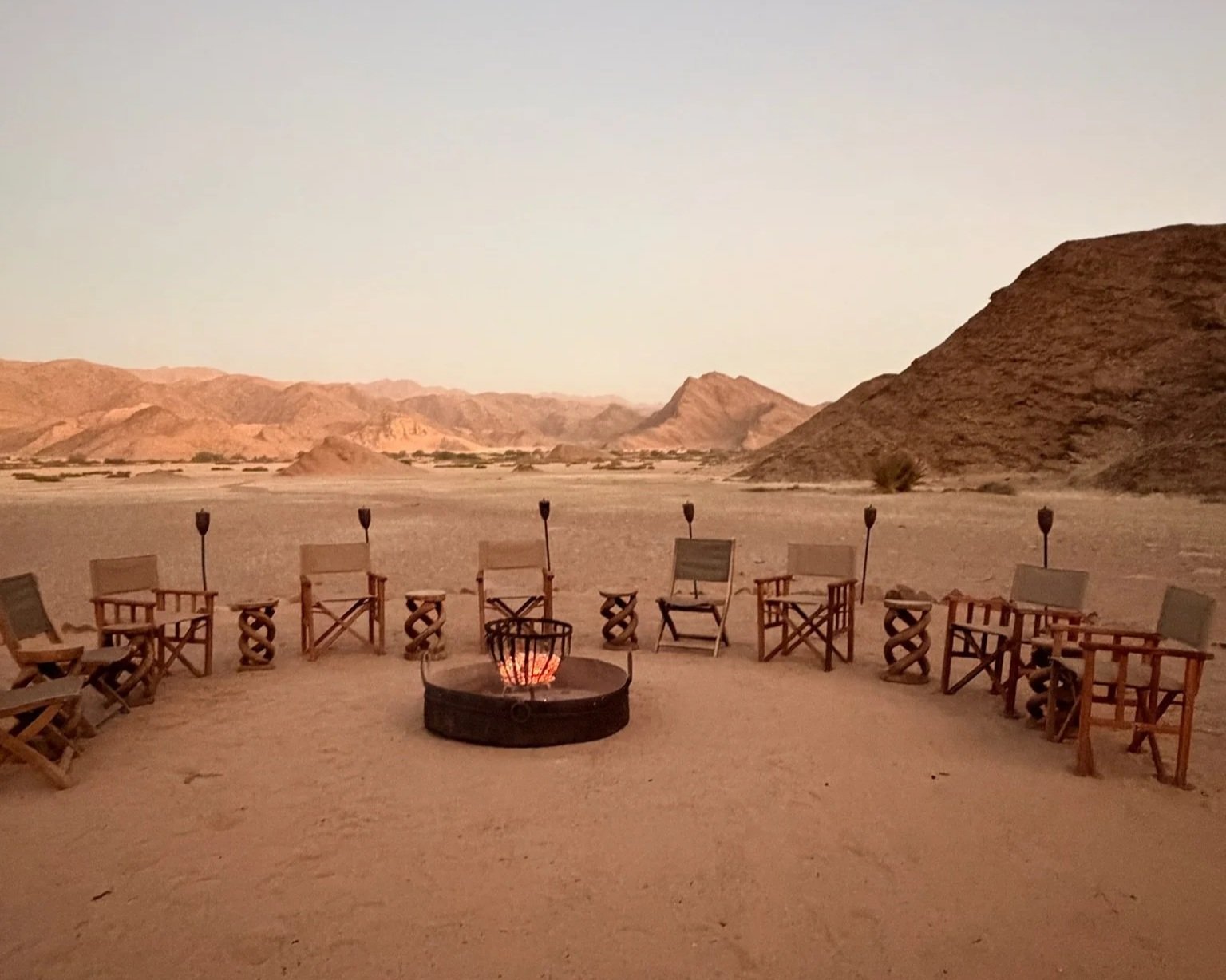
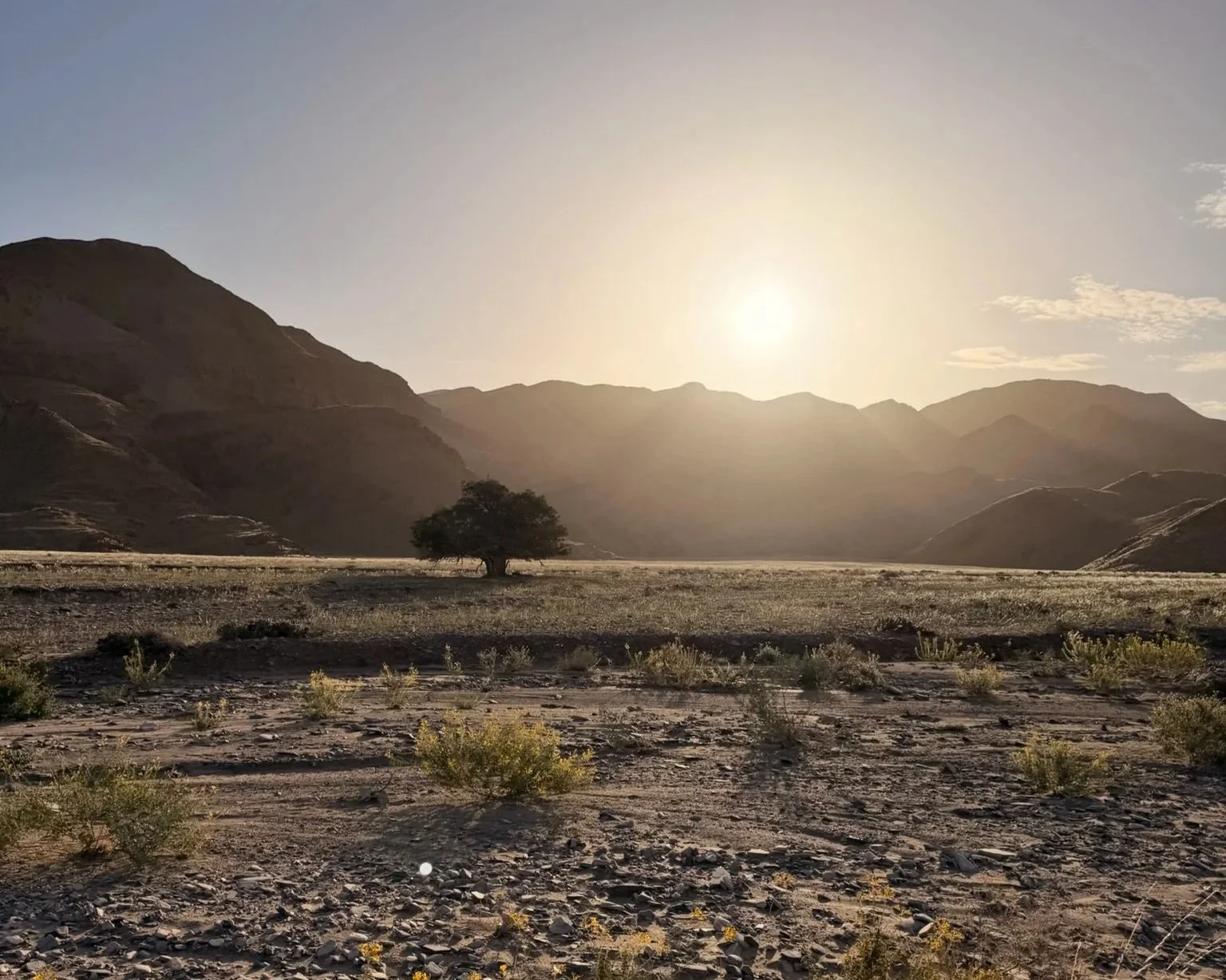
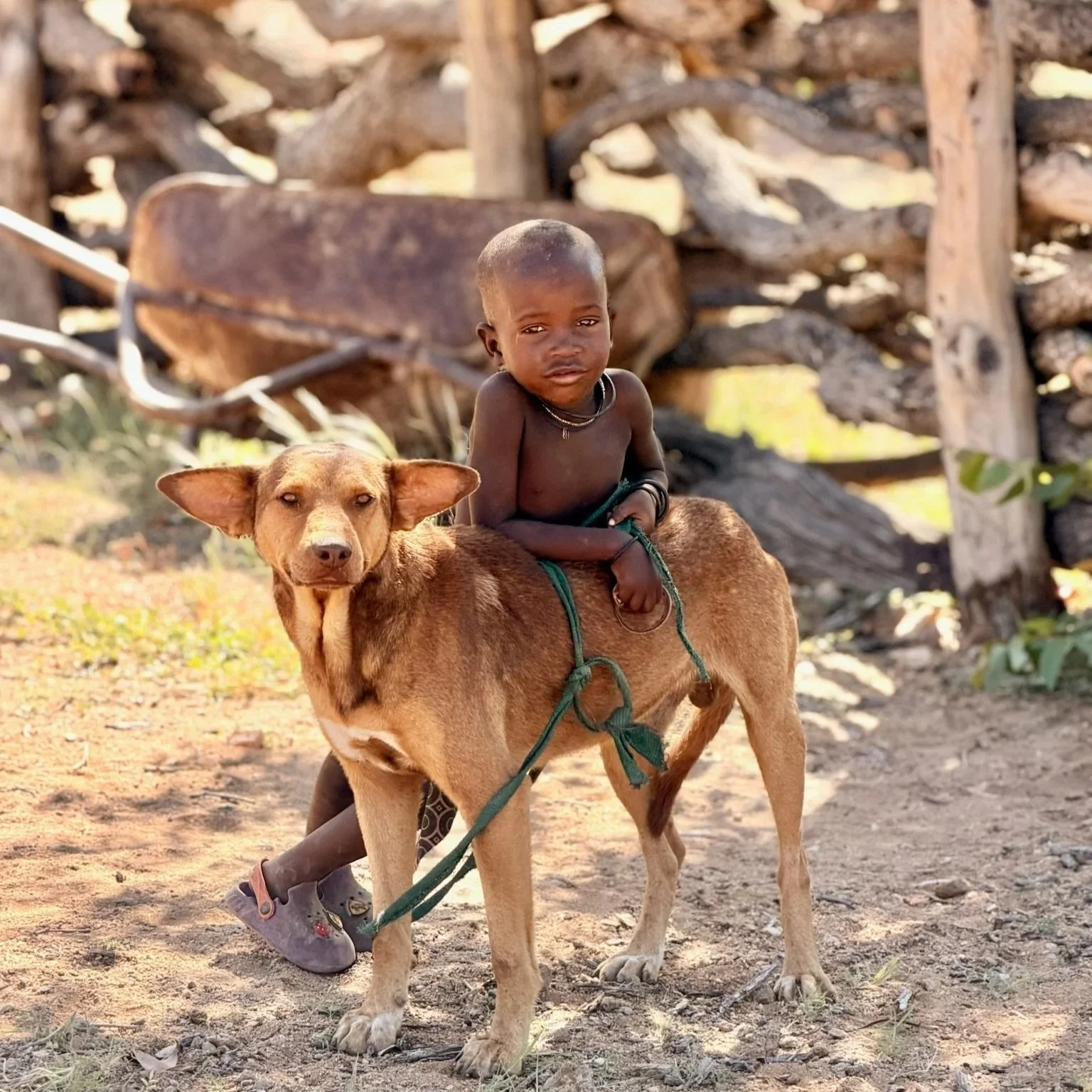
We had one more stop before turning back toward Botswana, made possible by our friends at Natural Selection: Hoanib Valley Camp in northwest Namibia’s Kaokoland.
Getting there meant another long 4x4 drive through restricted roads, rough tracks, and country remote enough that we needed an escort. After the cold fog of the Skeleton Coast, the landscape shifted again. The air grew hotter and drier. The coast fell away behind us, replaced by rock, dust, dry riverbeds, and hills that seemed to hold the heat.
It felt like passing from one version of Namibia into another.
Hoanib Valley is known for desert-adapted wildlife: elephants, giraffe, oryx, and springbok, all making a life in a place that looks, at first glance, like it is offering very little.
That may be what stayed with me most at the end: how much life there was in a landscape that did not make itself easy. Elephants moving through dry riverbeds. Giraffes stepping carefully across rock and scrub. Plants holding on with almost no water. Again and again, Namibia reminded us that empty is often just another word for not knowing how to look.
That final stretch gave us time to understand the privilege of a long trip. Namibia would be difficult to do on a typical PTO schedule, especially by road. The distances are too big, the tracks too slow, and the best parts too often found in the space between destinations.
But that is also the point. Namibia is not an easy place to skim. It asks for patience, planning, humility, and a high tolerance for sand. In return, it gives you something harder to find lately: the feeling of the world opening back up.